


Ответь на 5 вопросов
и узнай свои реальные шансы на получение визы всего за несколько минут.


Шаг 1 из 6
Шаг 6 из 6
Последний шаг!
Укажите контакты и получите результат
Отправляя форму, вы соглашаетесь на обработку персональных данных.
Шаг 6 из 6
Анализируем ваши ответы...
Проверяем введённые данные
UK Student Visa for Language Courses — Turnkey Support by Visa Agency
Want to learn English in the United Kingdom? We help choose a school in London or Manchester, obtain the invitation for you, and guide you through the entire process until the electronic visa arrives in your email.
WHAT DOCUMENTS
ARE NEEDED FOR THE VISA
Basic documents
- International passport (valid for at least 6 months)
- Proof of legal stay in Poland (visa, residence permit, PESEL UKR)
- Official invitation from an accredited language school in the UK (we obtain it for you)
- Bank statement confirming financial solvency
- Proof of tuition or deposit payment to the school (optional)
- Motivation letter explaining the purpose of studies
- Proof of accommodation in the UK (booking or housing from the school)
Depending on your status
- Employees: employment certificate, work contract, confirmation that the employer is aware of your departure
- Students: certificate from an educational institution in Poland, confirmation that parallel studies are not affected
- Entrepreneurs: registration documents, tax reports, proof of income
Strengthen your case
- Marriage certificate and/or children remaining in Poland
- Property ownership documents
- Previous visas to the UK, USA, or Canada
- Documents confirming ties to the country of residence
- Rental agreement in Poland
- Diplomas or certificates confirming that studying in the UK will support career growth
Consultation
We analyze your situation: language level, budget, preferred city, and study duration. We choose the optimal strategy and honestly assess your chances.
Choosing a language school
We offer partner schools in London and Manchester. If needed, we select a school based on your individual request.
Receiving the invitation
We apply to the school on your behalf and obtain the official student invitation. Waiting time for the invitation is 10–14 days.
Application form
We complete the online application on the VFS Global website. After submission, you receive confirmation with the application number.
Visa fee payment
The fee is paid online and is non-refundable in case of refusal. When applying outside your country of citizenship, an additional €96 biometric fee applies.
VFS appointment
We book a convenient appointment in Warsaw or another capital city. Waiting times range from several days to several weeks.
Document preparation
We prepare the full package: school invitation, application form, motivation letter, financial documents, and everything else required for your situation.
Biometrics & decision
You visit VFS to submit fingerprints and a photo. Processing time is up to 3 weeks. After approval, the electronic visa is sent to your email.
Visa fees:
6 months — £115 | 2 years — £432 | 5 years — £670 | 10 years — £963
Processing times:
- Consultation and school selection: 1–2 days
- Waiting for the school invitation: 10–14 days
- Case preparation: from 7 to 10 days after receiving the invitation
- Queue at the VFS visa center: from several days to several weeks
- Embassy processing time: up to 3 weeks
- Priority processing: 5 working days
- The visa is sent electronically via email
Entry rules:
- Validity period: for the duration of studies according to the invitation
- Entry type: multiple-entry visa
- Length of stay: up to 6 months per entry
- Entry to the UK: not earlier than 1 month before the start of the course
VFS Global Visa Center — Warsaw
Document submission and biometrics:
British Embassy in Warsaw
YOUR
VISA
The result you came for — an approved visa in your hands.
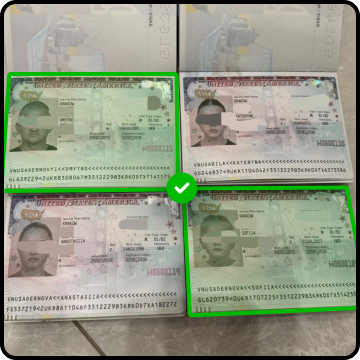
OUR
WORK
Full support: from filling out the application to receiving your passport.

I postponed it twice — thought I would be denied. The guys found weak spots and fixed them. Visa is in my passport!
bibosinkaYOUR VISA
IS COMING SOON!
- All the bureaucracy is on us — you just attend the interview.
- Honest assessment of chances before starting work — no empty promises.
- A to Z support — from the first consultation to the stamp in the passport.
GET A FREE
CONSULTATION
We will call you back in 15 minutes — assess your chances and tell you exactly what you need.
By submitting the form, you agree to the processing
of personal data.
YOU ONLY DREAM
WE DO THE REST
From the first question «which visa fits?» to the moment
you hold the stamp in your passport
 STEP 1
We’ll choose the school
for you
London or Manchester, intensive or standard course, group classes or individual format — we analyze your needs and offer the best option from our partner schools.
 STEP 2
We’ll get the invitation
for you
We apply to the school and obtain the official student invitation — you do not need to deal with a foreign school on your own.
 STEP 3
We’ll complete the form and
upload documents
One mistake — and the system may reject the application. We handle everything ourselves and double-check it.
 STEP 4
We’ll book VFS at a
convenient time
We book a convenient appointment in Warsaw or the capital of any other country. Waiting times range from several days to several weeks.
 MAIN
MAIN
Full support from A to Z —
we stay with you at every step
Question at 10 PM? We reply. The embassy requested additional documents? Already preparing them. You are never left alone with the system.
 PERSONAL
Preparation using our
unique methodology
We help build a strong student case — motivation letter, school choice justification, proof of intent to return — so the embassy has no doubts about your trip purpose.
GUARANTEE
We work until
the result
In case of refusal, we analyze the reason, fix it and reapply free of charge.
NOT AN AGENCY —
A TEAM THAT
DELIVERS RESULTS
Physical office, official contract, and a personal
manager for every case
- Office in Warsaw — you can visit in person
- We work officially, under a service contract
- We process visas for 10+ countries — we know the requirements for each
- A personal manager handles your case until the stamp
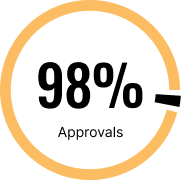
Our clients get their
visa on the first try
WHAT YOU GET WITH US
— AND WHAT YOU LOSE WITHOUT US
C VISA AGENCY
- We provide a ready-made plan — no googling or doubts
- We double-check the application — no errors, no refusals
- We know how to present finances so you are trusted
- We find a slot in days, not months
- We book a hotel without payment — your money stays with you
- In case of refusal — free resubmission and a new strategy
- We guide you to the stamp. 98% get their visa on the first try
ON YOUR OWN WITHOUT US
- You read forums for hours — and aren't sure it's right
- Mistake in the application → refusal → black mark in the embassy
- You don't know how to present finances to be trusted
- You search for a slot yourself — and wait 2–4 months
- Tickets and hotel are paid. No visa. Money is frozen
- You got a refusal — and don't know what to do next
- Time, nerves, and money — all on you. No guarantees
RESULTS WE ARE PROUD OF


EVERYTHING YOU NEED TO KNOW BEFORE APPLYING
Do I need a visa for language courses in the UK?
Do I need to know English to get a student visa?
What is a student invitation and why is it required?
In which cities do you have partner schools?
Do I need to pay for the courses before getting the visa?
Do I need to visit the embassy in person?
How much does a UK student visa for language courses cost?
How long does the whole process take?
Can I work in the UK during language courses?
How long is the visa issued for?
How is the visa issued?
When can I enter the UK after receiving the visa?
Can I leave and re-enter the UK during my studies?
Do I need to know English to communicate with VFS?
Does a Polish residence permit improve my chances?
What are the main reasons for student visa refusals?
What should I do if I already received a refusal?
Does participation in the Green Card lottery affect visa approval?
Can I apply for a visa together with my family?
Is previous travel history taken into account?
NOT SURE IF YOU WILL
GET A VISA?
This is exactly where we start. Free assessment
in 15 minutes — and you will know exactly what to do next.
- Leave a request — 1 minute
- Get your chances assessed — 15 minutes
- Get a visa — from 5 days
By submitting this form, you agree to the processing of personal data.
OTHER DESTINATIONS


In the UK, English quickly ceases to be a textbook subject. Beyond the doors of a language school, it continues in shops, on the subway, in pubs, and in conversations with someone whose accent initially sounds completely different from the English they learned in classes. It's precisely for this immersion that many travel to a country where the language surrounds them from morning until night.
However, a UK student visa for language courses doesn't always mean the same visa category. The procedure depends, among other things, on the duration and format of study. Visa Agency first helps you choose a school and program, then determines the most suitable visa option and prepares documents tailored to your specific course.
What visa is needed to study language courses in the UK?
Here, the course duration is crucial. English can be studied for up to six months as a Standard Visitor. If a program lasts longer than 6 months but not longer than 11 months, a separate Short-Term Study visa is required.
When English studies last longer than 11 months, a Student visa is required. This is a different route with separate requirements for the educational institution, confirmation of enrollment, and the student.
Therefore, the word ""student"" here is relative: short- and medium-term language programs are not supported by a Student visa, although the purpose of the trip in both cases remains educational.
Who can get a student visa for language courses?
You can study English in the UK both immediately after school and years after university. Age alone does not limit adult applicants, but Short-Term Study and Student visas are available from age 16. Students aged 16-17 will also need parental consent and proof of travel and accommodation arrangements.
The applicant must be genuinely enrolled in a suitable course and traveling to the UK to study. A separate ""genuine student"" requirement applies for Student visas: UKVI assesses whether the chosen program is suitable for the individual's circumstances and plans.
Which language schools are suitable for visa applications?
Finding a school with a good program and convenient schedule is not enough to obtain a visa. For short courses and Short-Term Study programs, the educational institution must have recognized accreditation in the UK. For example, language centers can be checked on the Accreditation UK register, maintained by the British Council.
For Student visas, the rules are more stringent: the school or college must have a student sponsor license and the right to issue CAS. Therefore, the same English course may be suitable for a short trip, but not qualify for a full-fledged Student visa.
Before paying for a program, it's best to check the educational institution's status for the specific visa route you plan to travel.
What documents are needed to obtain a visa?
All three options share one commonality: you need to show who is traveling to the UK and what course they have been accepted into. The package then depends on the visa you choose. Typically, the following documents are prepared with the application:
- A valid passport;
- Confirmation of enrollment from the school: a letter for Standard Visitor and Short-term Study visas, or a CAS letter for Student visas;
- Certified translations of documents if the originals are not in English or Welsh;
- A tuberculosis test certificate, if required for a specific applicant;
- For students aged 16-17, parental or guardian consent and travel documentation.
For Short-term Study visas, the student must also indicate where they intend to live and how they plan their travel. The financial package depends on the chosen route, so we will discuss this separately.
How to confirm enrollment in language courses
For short-term programs and Short-term Study visas, the school issues an enrollment letter. It must include the course name, duration, and cost. For short-term studies, this is mandatory confirmation that the applicant has indeed been accepted to the English course.
Student visas use a different document – a Confirmation of Acceptance for Studies, or CAS. This is not a paper certificate, but an electronic record created by a licensed educational sponsor after a student is enrolled. The school provides the applicant with a CAS reference number, which is then included in the visa application.
Therefore, a standard letter from a language school does not replace the CAS where studies are specifically being arranged with a Student visa.
How to apply for a student visa for language courses
Once the school and visa route have been selected, the application is completed online through GOV.UK. The application includes details about the course, the trip, and the applicant, uploading documents, and paying the required fees.
The subsequent procedure depends on the chosen visa. For a Short-term Study visa, the applicant must register at a visa application center, where they confirm their identity and submit biometric data. For a Student visa, the system may direct the applicant to the visa application center or prompt them to confirm their identity through the UK Immigration: ID Check app.
After applying, monitor UKVI for updates. If additional documents or an interview are required, the agency will notify you separately. If approved, immigration status is processed digitally as an eVisa.
How to prove financial solvency
For a Student visa, the amount is calculated according to UKVI rules, not at the applicant's discretion. You must show unpaid course fees from CAS and living expenses: £1,529 for each month in London or £1,171 per month outside London, for a maximum of nine months.
Usually, the required amount must be in the account for 28 consecutive days, with the last day of this period being no more than 31 days before application. Funds can be your own, your parents', a loan, or provided by an official sponsor, as long as UKVI requirements are met.
There is no fixed minimum for Short-Term Study. You must prove that you have sufficient funds for the course, accommodation, and return travel; GOV.UK provides bank statements or payslips for the past six months as examples.
Can I work while studying?
Assuming that language courses can be partially recouped through part-time work is dangerous. Work is prohibited at all on the Standard Visitor and Short-Term Study visas, including unpaid internships or work placements.
With a Student visa, everything depends on the institution and program. If the course is below undergraduate level and is taken at a university that meets Home Office requirements, the student may be allowed to work up to 10 hours per week during their studies. If you are studying at another licensed educational institution, you may not be entitled to regular part-time work.
Therefore, your ability to work should be verified against the terms of your specific visa, and you should plan for course and living expenses without considering future earnings in the UK.
How long does it take to process a student visa?
When applying from within the UK, the standard processing time is the same for both Student visas and Short-term Study visas – approximately 3 weeks. UKVI also specifies the same timeframe for Standard Visitor visas. This period begins after the application has been submitted, identity has been confirmed, and the required documents have been submitted.
If UKVI requires further verification of documents or an interview, the review process may take longer. Some countries offer a paid priority service: they aim to make a decision within 5 working days, but this timeframe is not guaranteed for complex applications.
Visa processing costs?
The price depends on the chosen route. A Standard Visitor visa for a course of up to 6 months costs 135 GBP. A Short-Term Study visa of 6-11 months costs 228 GBP, plus an IHS surcharge, which is typically 776 GBP.
A Student Visa costs 558 GBP. This is also supplemented by an IHS surcharge at the student rate of 776 GBP per year, but the final cost is calculated based on the visa duration. Additional costs may include translations, tuberculosis testing, and expedited processing, if available.
Why a Student Visa May Be Denied
For language courses, UKVI assesses more than just the school fees. It's important that the chosen course is appropriate for the applicant's circumstances and that the trip itself represents genuine study. The risk of refusal is higher if:
- The school or program is not suitable for the selected visa;
- There is no suitable CAS for a Student visa;
- There is insufficient funds or financial documents do not meet UKVI requirements;
- The application form does not match the documents;
- The purpose of study appears unconvincing;
- UKVI doubts that the applicant will leave the UK after the course;
- Required documents, including a tuberculosis test when required, have not been provided.
For Short-term Study, it is additionally important to confirm that the applicant is going to the stated English course and will be able to pay for tuition, accommodation, and return travel.
Why apply for a student visa through Visa Agency
Several individual tasks must be completed before applying, and that's why Visa Agency handles these tasks sequentially to ensure the program conditions match the applicant's what is indicated in the application. Our team will:
- Selecting a language school based on your city, budget, English level, and duration of study;
- Determining the appropriate visa: Standard Visitor, Short-term Study, or Student visa;
- Checking the school and its eligibility to accept international students in the selected category;
- Assistance with admission and obtaining a letter of acceptance or CAS;
- Preparing a personalized list of documents;
- Checking financial evidence;
- Completing the online application and preparing documents for upload;
- Scheduling biometrics, if required;
- Supporting additional UKVI inquiries;
- Reviewing refusals and preparing reapplications.
Visa Agency partners with language schools in London and Manchester and can select a program if needed. and in another city. Admission decisions are made by the school itself, while visa decisions are made by UKVI. The agency's job is to guide the applicant from program selection to the final visa application, ensuring that the requirements of different categories are not mixed. Submit your application, and we'll see what can be done specifically for your case!
CONTACTS
-
Our address Konstruktorska 11, 02-673 Warszawa
-
Email [email protected]
-
Phone number +48 573 580 955