



F-1 Student Visa to the USA for Language Courses via Poland — Turnkey Support by Visa Agency
Want to learn English in the USA? We help you choose a school in major American cities, obtain the I-20 form for you and guide the whole process until the visa is in your passport.
WHAT DOCUMENTS
ARE NEEDED FOR THE VISA
Basic set
- International passport, valid for at least 6 months
- Proof of legal stay in Poland: visa, residence card, PESEL UKR
- I-20 form from an accredited language school in the USA, obtained by us for you
- Completed DS-160 form with confirmation and barcode
- 5×5 cm photo according to US Embassy requirements
- Proof of MRV visa fee payment ($185)
- Proof of SEVIS fee payment ($350)
Depending on your status
- Employees: employment certificate, employment contract, confirmation that the employer knows about your departure
- Students: certificate from an educational institution in Poland
- Entrepreneurs: registration documents, tax reports, proof of income
Strengthen your case
- Proof of partial payment for the course
- Documents confirming family ties in Poland or Europe
- Property documents or rental agreement in Poland
- Previous visas to the USA, United Kingdom or Canada
- Certificates and diplomas proving the career value of English
- Bank statement for the last 3–6 months
Consultation
We analyze your situation: English level, budget, preferred city and study dates. We assess your chances and choose the best visa strategy.
Language school selection
We select a partner school in the USA based on your request. We work with schools in New York, Miami, Boston, San Francisco and Atlanta.
Getting the I-20 form
We submit your application to the school and obtain the official I-20 form for you. Waiting time is usually 10–14 days.
Fee payment
We help pay the required SEVIS fee ($350) and MRV consular fee ($185) through the official systems.
DS-160 form
We complete the DS-160 form and prepare the confirmation page with a barcode for the interview.
Interview appointment
We book your interview at the US Embassy in Warsaw or the US Consulate in Krakow for the nearest available date.
Interview preparation
We prepare you using our method: we review consular questions and practice confident answers.
Visa decision
The decision is usually announced during the interview. After approval, the passport with the visa is delivered by courier within 3–5 business days.
Partner schools in the USA:
Atlanta | Boston | New York | San Francisco | Miami
Processing time:
- Consultation and school selection: 1–2 days
- Waiting for the I-20 form from the school: 10–14 days
- DS-160 completion and fee payment: 2–5 days
- Waiting for the interview date: from 1 to 3 weeks
- Passport delivery after approval: 3–5 business days by courier
Entry rules:
- Visa validity: from 1 to 5 years
- Entry to the USA: no earlier than 30 days before the course start date
- Stay after the course ends: 60 days
- Multiple entries: allowed with a valid visa and signed I-20
US Embassy in Warsaw
US Consulate in Krakow
YOUR
VISA
The result you came for — an approved visa in your hands.

OUR
WORK
Full support: from filling out the application to receiving your passport.

I postponed it twice — thought I would be denied. The guys found weak spots and fixed them. Visa is in my passport!
bibosinkaYOUR VISA
IS COMING SOON!
- All the bureaucracy is on us — you just attend the interview.
- Honest assessment of chances before starting work — no empty promises.
- A to Z support — from the first consultation to the stamp in the passport.
GET A FREE
CONSULTATION
We will call you back in 15 minutes — assess your chances and tell you exactly what you need.
By submitting the form, you agree to the processing
of personal data.
YOU ONLY DREAM
WE DO THE REST
From the first question «which visa fits?» to the moment
you hold the stamp in your passport
 STEP 1
We’ll choose the
right school
New York, Miami or another city, intensive or standard course — we analyze your goals and select the best option from our partner schools in 5 US cities.
 STEP 2
We’ll obtain the I-20
for you
We apply to the school and obtain the official I-20 form for you — no need to deal with American schools on your own.
 STEP 3
We’ll complete DS-160
without mistakes
One mistake in the application can lead to refusal. We fill everything out for you and double-check every field.
 STEP 4
We’ll book your
interview
We schedule your interview in Warsaw, Krakow or the capital of another country. Waiting times range from several days to several weeks.
 MAIN
Full support
from A to Z
Question at 10 PM? We reply. The consul requested extra documents? We are already preparing them. You are never left alone with the system.
 PERSONAL
Two interview
preparation sessions
We conduct two preparation sessions using our own method. You will know the consular questions in advance and understand exactly how to answer.
GUARANTEE
We work until
success
If you receive a refusal, we analyze the reason, fix the weak points and reapply free of charge.
NOT AN AGENCY —
A TEAM THAT
DELIVERS RESULTS
Physical office, official contract, and a personal
manager for every case
- Office in Warsaw — you can visit in person
- We work officially, under a service contract
- We process visas for 10+ countries — we know the requirements for each
- A personal manager handles your case until the stamp
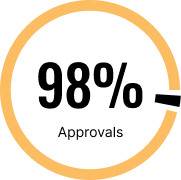
Our clients get their
visa on the first try
WHAT YOU GET WITH US
— AND WHAT YOU LOSE WITHOUT US
C VISA AGENCY
- We provide a ready-made plan — no googling or doubts
- We double-check the application — no errors, no refusals
- We know how to present finances so you are trusted
- We find a slot in days, not months
- We book a hotel without payment — your money stays with you
- In case of refusal — free resubmission and a new strategy
- We guide you to the stamp. 98% get their visa on the first try
ON YOUR OWN WITHOUT US
- You read forums for hours — and aren't sure it's right
- Mistake in the application → refusal → black mark in the embassy
- You don't know how to present finances to be trusted
- You search for a slot yourself — and wait 2–4 months
- Tickets and hotel are paid. No visa. Money is frozen
- You got a refusal — and don't know what to do next
- Time, nerves, and money — all on you. No guarantees
RESULTS WE ARE PROUD OF


EVERYTHING YOU NEED TO KNOW BEFORE APPLYING
What is an F-1 visa and what is it for?
What is the I-20 form and why is it required?
Which US cities do your partner schools operate in?
NOT SURE IF YOU WILL
GET A VISA?
This is exactly where we start. Free assessment
in 15 minutes — and you will know exactly what to do next.
- Leave a request — 1 minute
- Get your chances assessed — 15 minutes
- Get a visa — from 5 days
By submitting this form, you agree to the processing of personal data.
OTHER DESTINATIONS


You can learn English at home using an app, in evening classes, or with a teacher via video call. But the language feels completely different when you spend the entire day using it: ordering coffee, asking for directions, solving everyday problems, meeting new people. Therefore, for many, spending a few months in the US to fully immerse themselves in English becomes not just a course of study, but a separate stage of life.
If the trip is specifically focused on studying, an F-1 student visa is issued for the US. First, you need to enroll in a suitable program, and then the visa process begins. Visa Agency helps you through the entire process, from choosing a language school to preparing your application and interview at the consulate, significantly reducing the likelihood of rejection on your first application!
What is a US student visa for language courses?
Language courses come in many different forms. You can take a few lessons during your vacation and still remain a regular tourist. Or you can come to the US for a full-time program, where English takes up most of the week and the entire trip is built around it. In the latter case, an F-1 visa is required.
This category is intended, among other things, for language training programs and allows you to study in the US while maintaining student status. A regular B-2 visa is not suitable for this type of study: it only allows short, recreational courses that do not earn academic credits and do not lead to a degree or certificate.
Who can obtain an F-1 student visa?
You might meet a recent graduate, an entrepreneur, a professional with ten years of experience, or someone who wants to brush up on their English before the next stage of their career. An F-1 visa is not tied to a specific profession and does not require the applicant to have already been a student in their home country.
For the visa, the applicant must be accepted into a full-time educational program and travel to the US specifically as a temporary student. After completing your studies, you're expected to leave the country, so the F-1 remains a nonimmigrant category.
Which language courses qualify for a visa?
Choosing a school based solely on city, price, and schedule for an F-1 student isn't possible. The educational institution must be certified by the Student and Exchange Visitor Program and authorized to accept foreign students in this category. You can check the official SEVP registry.
There's another requirement for English language programs: the language school itself or its English language program must be accredited by an organization recognized by the U.S. Department of Education. Therefore, the popularity of a course or good reviews doesn't necessarily mean it's suitable for a student visa.
The course must be a full-time, in-person course. Programs designed primarily for distance learning don't allow for the required F-1 academic workload.
What documents are needed for a student visa?
By the time of the interview, the school has likely already been selected and admission has been secured, so some of the documents are directly related to future studies. Please bring the following:
- A valid passport;
- A DS-160 confirmation page;
- Form I-20 signed by the school representative and the student;
- Proof of payment of the I-901 SEVIS Fee;
- A receipt for payment of the visa fee, if required by the chosen consulate;
- A photograph, if one was not uploaded when completing the DS-160.
The consular officer may also request documents proving previous education: a certificate, diploma, transcript, or exam results, if relevant to the application. For an adult applicant, information about their current employment or business will be useful, especially if the language courses are related to future professional plans.
Financial verification documents are also prepared in advance. Their content depends on the tuition and living expenses specified by the school.
What is an I-20 and how to get one
The I-20 confirms that the school has accepted the international student into the program and entered their information into the SEVIS system. The document is issued not by a visa agency or consulate, but by an authorized employee of the educational institution—a Designated School Official. The I-20 will then be needed for the DS-160 and the F-1 interview.
Before issuing the form, the school must complete the admissions process and verify that funds are sufficient for tuition and living expenses. The I-20 details the program itself, its start and end dates, estimated expenses, and sources of funding. Once completed, the document is signed by a school representative, and then by the student.
If a person is considering several language schools, they should apply for a visa with an I-20 from the one where they actually intend to study.
What is SEVIS and why pay the I-901 fee?
After the I-20 is issued, the student receives a SEVIS ID. This is necessary because the student's academic program and status as an international student are recorded in the Student and Exchange Visitor Information System. Through this system, schools and US agencies can see where and what program the student is studying.
For F-1 students, the I-901 SEVIS Fee is paid separately – currently $350. This fee is not included in the visa application fee. It is paid before applying for the F-1, and it is best to keep proof of payment for the interview. Spouses and children traveling as F-2 visa applicants receive their own I-20s, but do not pay a separate I-901.
How to Apply for a Student Visa for Language Courses
Once the I-20 is in hand and the SEVIS fee has been paid, the consular process begins. The student completes the DS-160, saves the confirmation page with the barcode, registers in the scheduling system of the selected consulate, and pays the visa fee. After this, they can select an available interview date.
Starting in July 2026, appointments must be made in the country of citizenship or residence. For example, a Ukrainian with a residence permit in France or Germany can have their interview in their actual country of residence, but the consulate has the right to request proof of local status. Applying in a third country without citizenship or residency has become less predictable.
On the appointed day, the student appears at the consulate with their passport, I-20, DS-160 confirmation, and other documents. The interview itself for F-1 applicants remains a standard part of the procedure.
How to Pass a Student Visa Interview
A student has one task at the interview: to relate the chosen courses to their real life. The consular officer may ask why they need English now, why they chose this particular school, how long the program will last, and what they plan to do upon their return. If an adult professional suddenly leaves for six months to study the language, it's better to be able to explain this choice specifically, rather than simply saying ""I want to improve my English.""
Funds for tuition and living expenses are checked separately. Answers about a sponsor, personal savings, or income must match those on the I-20 and financial documents. The same applies to education, work, and post-course plans: the DS-160, documents, and interview statements should not tell three different stories.
In 2026, online presence verification will also be in effect for F-1 visa applicants. The State Department is asking applicants to make their social media profiles publicly viewable. Therefore, interview preparation now includes not only a conversation with the consular officer but also a routine check to ensure that publicly available information does not contradict the stated circumstances.
How to prove financial solvency
The student already has a budget estimate: on the I-20, the school lists the estimated cost of tuition, housing, and other expenses. Financial documentation must demonstrate that this money is actually available and not just deposited into an account the day before the interview.
The source can vary. Some students pay for their courses from their own savings, while others receive assistance from family, an employer, or another sponsor. In this case, bank statements, income documents, scholarship confirmation, or a letter from the person covering the expenses, along with evidence of their financial means, will be helpful.
The consular officer looks not at just one ""correct"" figure, but at whether the funds are sufficient for the stated period and how clear their origin is. For a long-term program, it's especially important to explain how the student will be able to cover their studies and living expenses in the US beyond just the first few weeks.
Can I work while studying?
The F-1 visa doesn't prohibit students from working, but for language courses, the opportunities are significantly narrower than for college and university students. While studying, you can work on campus for up to 20 hours per week, and full-time during official vacations. Before starting such work, it's best to coordinate it with the DSO to ensure it complies with student status regulations.
Off-campus work is more complicated. Standard CPT and OPT programs are not available to English language training students. Off-campus employment authorization is only available in certain cases, such as cases of severe, unforeseen financial hardship after at least one academic year of study, and is processed through USCIS.
Therefore, you cannot rely on part-time work as your primary source of income for your studies. Funding for your program and living expenses must be confirmed before receiving your visa.
How long does it take to process a student visa?
For F-1 visas, the processing time largely depends on the consulate where the interview takes place. The wait list fluctuates throughout the year, so the State Department publishes up-to-date information in Global Visa Wait Times and advises students to apply early. A new F-1 visa can be issued as early as 365 days before the program start date on the I-20.
After the interview, the visa is not always issued immediately. The consular officer may submit the application for administrative processing or request additional information, and the duration of such a review cannot be determined in advance. The passport delivery time after approval also varies by consulate.
Therefore, it is best to base your application on the I-20 start date and allow for an appointment, interview, and any additional review.
Student Visa Application Cost
Before the interview, students pay two mandatory fees. The MRV fee for an F-1 visa is $185, and the I-901 SEVIS Fee is $350. The total government fees are $535.
After approval, some nationalities may be subject to an additional visa issuance fee. The presence and amount of this fee depend on the applicant's passport. For example, there is currently no such fee for Ukrainian citizens on F-1 visas.
Why a student visa might be denied
For F-1 visas, the consular officer is required to see a clear educational objective, realistic funding for tuition, and post-program plans. Refusal is more likely if:
- The choice of language school and the duration of the course are poorly aligned with the applicant's background and plans;
- Financial documents do not cover the expenses listed on the I-20, or the source of the funds is unclear;
- The interview answers are inconsistent with the DS-160 and documents;
- The consular officer is not convinced that the student will leave the United States after completing their studies;
- False information, past visa violations, or other grounds for refusal are discovered.
In some cases, the application is not permanently rejected, but transferred to additional review under 221(g).
Why Apply for a Student Visa Through a Visa Agency
For F-1 students, visa processing begins even before the DS-160. First, you need to find a school that accepts your student visa, go through the admissions process, and obtain an I-20. Only then do you pay SEVIS, the consular fee, the application form, and the interview. If you rework the process at every stage, it's easy to end up with documents that don't align with each other.
At Visa Agency, the entire process is handled as a single case:
- Select a language school based on the city, program duration, and budget;
- Help submit documents to the school and obtain a Form I-20;
- Accompany with payment of the I-901 SEVIS Fee and MRV fee through official systems;
- Complete the DS-160 based on the student's information and the chosen program;
- Help determine the consulate based on citizenship and country of residence;
- Schedule an interview;
- Check the documents the student brings to the consulate;
- Separately discuss the student's educational goal and how it relates to work, education, and Future plans;
- They conduct two interview preparation sessions and practice potential questions;
- They support the student if additional information is needed after the interview;
- If the student is rejected, they review the previous application and help prepare for the re-application.
The school itself makes the admissions decision and issues the I-20, and the visa is issued by the US consulate. The Visa Agency is responsible for ensuring that the application remains consistent between these stages and that the student comes to the interview prepared. Submit your application, and we'll see what we can do for you!
CONTACTS
-
Our address Konstruktorska 11, 02-673 Warszawa
-
Email [email protected]
-
Phone number +48 573 580 955