


Answer 5 questions
and find out your real chances of getting a visa in just a few minutes.


Step 1 of 6
Step 6 of 6
Last step!
Leave your contacts and get the result
By submitting this form you agree to the processing of your personal data.
Step 6 of 6
Analyzing your answers...
Checking the details you entered
South Korea Tourist Visa via Poland — Turnkey with Visa Agency
Planning a trip to South Korea? We handle the entire process — from document preparation to getting the visa in your passport. We know the specifics of applying from Poland for Ukrainians, Belarusians, and other nationalities.
WHAT DOCUMENTS
ARE NEEDED FOR THE VISA
Basic package
- Passport (valid for at least 6 months)
- Proof of legal stay in Poland (visa, residence permit, PESEL UKR)
- Completed visa application form (South Korean consulate form)
- Photo meeting Korean consulate requirements
- Proof of travel purpose and itinerary
- Hotel booking or accommodation confirmation in South Korea
- Round-trip flight reservation
- Motivation letter
Depending on your situation
- Employees: employment certificate stating position, salary and employment period, employment contract, proof of approved leave
- Students: certificate from educational institution, student ID, proof of tuition payment
- Entrepreneurs: company registration documents, tax reports, contracts with clients
Additional documents
- Previous visas to South Korea, Japan, the USA, and the UK
- Travel history to EU countries
- Family documents in Poland or Europe
- Bank statements for the last 3–6 months
- Property ownership or rental documents in Poland
- Detailed travel itinerary in South Korea
- Proof of sufficient financial resources
Consultation
We analyze your situation: legal status in Poland, purpose of travel, and financial background. We develop the application strategy and honestly assess your chances before any payment.
Travel itinerary and reservations
A detailed travel plan with hotels, routes, and dates is required for a Korean visa. We help prepare the itinerary and arrange hotel and flight reservations — one of the key requirements of the Korean consulate.
Application form completion
We complete the Korean visa application form and double-check every field. Even a small mistake can lead to delays or refusal.
Preparation of the full document package
We prepare the complete package: application form, financial documents, proof of travel purpose, employment certificate, itinerary, hotel and flight bookings, motivation letter, and any additional documents required for your case.
Submission to the consulate
Documents are submitted in person to the Consulate of South Korea in Warsaw.
Application review
Standard processing time is 5–7 business days. The South Korean consulate is known for efficient processing, and delays are uncommon when documents are prepared correctly.
Visa issuance
The South Korean visa is issued electronically and sent to your email address. Print it and present it during airline check-in and border control upon arrival.
Processing times:
- Case preparation with us: from 3 to 14 days
- Waiting time for appointment: 1–3 weeks
- Consular processing: 5–7 business days
- Electronic visa delivery by email: 1–2 days after approval
Validity and entry rules:
- Single-entry visa validity: 3 months from issuance date
- Multiple-entry visa validity: up to 5 years
- Maximum stay per visit: up to 90 days
- Visa is issued electronically
- Entry is allowed only during the visa validity period
Consulate of South Korea in Warsaw
YOUR
VISA
The result you came for — an approved visa in your hands.

OUR
WORK
Full support: from filling out the application to receiving your passport.

I postponed it twice — thought I would be denied. The guys found weak spots and fixed them. Visa is in my passport!
bibosinkaYOUR VISA
IS COMING SOON!
- All the bureaucracy is on us — you just attend the interview.
- Honest assessment of chances before starting work — no empty promises.
- A to Z support — from the first consultation to the stamp in the passport.
GET A FREE
CONSULTATION
We will call you back in 15 minutes — assess your chances and tell you exactly what you need.
By submitting the form, you agree to the processing
of personal data.
YOU ONLY DREAM
WE DO THE REST
From the first question «which visa fits?» to the moment
you hold the stamp in your passport
 STEP 1
Let’s review your
situation
We analyze your legal status in Poland, travel purpose, and financial situation. We immediately explain your chances and what documents are needed for your case.
 STEP 2
Create a detailed
itinerary
The Korean consulate requires a detailed travel plan with hotels and routes. We help prepare and structure it correctly — one of the key documents for a Korean visa.
 STEP 3
Complete the application and
prepare documents
One mistake in the application can lead to delays or refusal. We handle everything and double-check every detail.
 STEP 4
Submit documents
to the consulate
We guide you through the document submission process at the South Korean Consulate in Warsaw.
 MAIN
MAIN
Full support from start to finish —
with you every step of the way
A question at 10 PM? We reply. The consulate requested additional documents? We are already preparing them. You are never left alone with the process.
 PERSONAL
Individual approach
for every case
Ukrainian, Belarusian, freelancer, or employee — every applicant requires a different strategy. We tailor the approach to your specific situation.
GUARANTEE
We work until
the result
If your visa is refused, we analyze the reason, fix the issues, and prepare a new application free of charge.
NOT AN AGENCY —
A TEAM THAT
DELIVERS RESULTS
Physical office, official contract, and a personal
manager for every case
- Office in Warsaw — you can visit in person
- We work officially, under a service contract
- We process visas for 10+ countries — we know the requirements for each
- A personal manager handles your case until the stamp
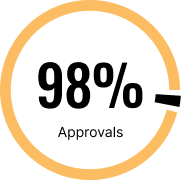
Our clients get their
visa on the first try
WHAT YOU GET WITH US
— AND WHAT YOU LOSE WITHOUT US
C VISA AGENCY
- We provide a ready-made plan — no googling or doubts
- We double-check the application — no errors, no refusals
- We know how to present finances so you are trusted
- We find a slot in days, not months
- We book a hotel without payment — your money stays with you
- In case of refusal — free resubmission and a new strategy
- We guide you to the stamp. 98% get their visa on the first try
ON YOUR OWN WITHOUT US
- You read forums for hours — and aren't sure it's right
- Mistake in the application → refusal → black mark in the embassy
- You don't know how to present finances to be trusted
- You search for a slot yourself — and wait 2–4 months
- Tickets and hotel are paid. No visa. Money is frozen
- You got a refusal — and don't know what to do next
- Time, nerves, and money — all on you. No guarantees
RESULTS WE ARE PROUD OF


EVERYTHING YOU NEED TO KNOW BEFORE APPLYING
Do Ukrainians and Belarusians need a visa for South Korea?
Can I apply for a South Korean visa while staying in Poland?
Is a hotel reservation required for a Korean visa?
Is a detailed travel itinerary required?
How much does a South Korean visa cost?
How long does it take to obtain a South Korean visa?
How long is a South Korean tourist visa valid?
How long can I stay in South Korea with a tourist visa?
Can I work in South Korea with a tourist visa?
Is medical insurance required for a Korean visa?
How much money should I have in my bank account?
Do I need to buy flight tickets before getting the visa?
What are the main reasons for refusal of a Korean visa?
What should I do if I was already refused a Korean visa?
Does a residence permit or UKR PESEL in Poland affect my chances?
Does having a Japanese or US visa help when applying for a Korean visa?
How is a Korean visa issued?
Is previous travel history considered during the application process?
Can I visit all regions of South Korea with one visa?
Can I apply for a South Korean visa without knowing English?
NOT SURE IF YOU WILL
GET A VISA?
This is exactly where we start. Free assessment
in 15 minutes — and you will know exactly what to do next.
- Leave a request — 1 minute
- Get your chances assessed — 15 minutes
- Get a visa — from 5 days
By submitting this form, you agree to the processing of personal data.
OTHER DESTINATIONS


A South Korean itinerary is usually conceived immediately after watching a YouTube video. At first, Seoul, Busan, Jeju, palaces, markets, and a dozen other places to see in one trip appear in the notes. Only later does it become clear that a South Korean tourist visa might be required, and the list of attractions is supplemented by an application form, funding, proof of residency, and the specific consulate's regulations.
To ensure your vacation remains a vacation and doesn't turn into a separate ""bureaucratic marathon,"" Visa Agency can handle this part of the trip for you. We analyze the applicant's situation, determine the requirements for the application location, collect documents, assist with the itinerary and financial details, and support the application process until the consulate makes a decision.
What is a tourist visa to South Korea and who needs one?
When a trip is planned for leisure rather than work, study, or meeting with a host, the Korean system classifies it as a C-3-9 Ordinary Tourist. Essentially, this is a standard short-term tourist category: it is required for those who need to obtain a visa in advance for a vacation in the Republic of Korea.
A single-entry C-3-9 visa at many consulates allows a stay of up to 90 days, although the actual permitted period may depend on the specific application. Therefore, ""up to 90 days"" means ""up to 90 days."" Here, it's best to think of it as an upper limit, rather than an automatically granted three months.
Who needs a tourist visa to South Korea?
The passport is the deciding factor. If your citizenship entitles you to visa-free entry, a C-3-9 is not required for a standard tour. Instead, you may need a K-ETA, although for some visa-free countries, the temporary exemption from the K-ETA has been extended until the end of 2026.
However, citizens of countries that do not have a visa-free regime must obtain permission in advance. For Ukrainians with a regular passport, a tourist trip is considered a visa-based trip: a short-term C-3 visa will be required before departure. Living in France, the Czech Republic, or another country doesn't in itself change the visa requirements for a Ukrainian passport, but it can influence which consulate you apply through and what documents they request.
What documents are needed for a tourist visa to South Korea?
The C-3-9 is the same, but the consulates' checklists are not identical. One consulate asks for a three-month bank statement, while another specifically requires proof of employment, accommodation reservations, or a detailed daily itinerary.
Therefore, you can assemble the ""base"" in advance, and then check the final package with the consulate you'll be applying through. In most cases, the applicant will need:
- A valid passport;
- Proof of legal residence in the country of application (if the applicant is not a citizen);
- Visa application form and photograph;
- Documents of work, study, or business;
- Bank statements and other financial evidence;
- An itinerary or travel plan for Korea;
- Information about the place of residence;
- A round-trip flight reservation or itinerary (if required by the specific mission).
If someone else is paying for the tour, documents from the sponsor and proof of the relationship with them may be required. Some consulates request additional documents, so the same list cannot be transferred from one country of application to another without verification.
How to apply for a tourist visa to South Korea
The Korean Visa Portal is a bit confusing: the C-3 application form can be completed online, but this doesn't make the tourist application itself electronic. After completing the PDF e-Form, you must print it (or print it blank and write everything by hand) and submit it to the Korean embassy or consulate along with your passport, photograph, and other documents. A full e-Visa for a regular C-3-9 is not included in the standard list of online categories.
From there, the local mechanics begin. The embassy itself determines the appointment procedure, the method of document acceptance, and the possibility of submitting through an authorized intermediary. Therefore, before filling out the application, it's a good idea to first find the right consulate and check its current procedures to avoid preparing a package tailored to the rules of another country.
How to Confirm the Purpose of a Tourist Trip
The phrase ""I want to see Korea"" sounds normal in conversation, but it's not very specific for the consulate. A much more convincing itinerary is one that shows your arrival time, the cities you plan to visit, where you'll be staying, and your return time. You don't have to detail every hour, but the trip should look realistic and not something you've concocted overnight just for the application.
The dates in this plan shouldn't conflict with your flight, your accommodation should be located where you actually plan to stay, and your budget should be consistent with the duration of the trip. The consulate also requires confirmation of your flight and accommodation reservations; these are also included. However, it's generally not a good idea to purchase non-refundable tickets before the consulate's decision: it's sufficient to confirm the travel plan using the method required by the application location.
Financial Requirements for Obtaining a Tourist Visa
In Korea, there's no single amount that simply needs to be shown in your bank account to consider the financial matter closed. Some consulates look at three months' worth of statements, while others may require a minimum balance or additional proof of income. Therefore, the advice to ""deposit a few thousand dollars before applying"" is actually harmful here.
It's much more important that the funds appear natural to the applicant and are appropriate for the trip. The bank statement should explain where the funds are coming from, and the tour budget should be consistent with the duration of the trip, accommodations, flights, and the person's usual expenses. If the trip is being paid for by someone else, sponsorship rules should be checked separately with the specific consulate: acceptable sponsors and required documentation vary.
How long does it take to process a tourist visa to South Korea?
A week at one consulate and almost a month at another—for a C-3-9, this is a very real difference. For example, in the Philippines, short-term C-3 visas are currently processed in about 10 business days, in Jeddah, the benchmark is two weeks, and in Seattle, four weeks. Therefore, it is simply impossible to give a single processing time for every country.
It's best to add a little extra time to the stated time. The consulate may request additional documents or take longer to process, and the expedited process is not available everywhere. It's wiser to base your departure date on the decision you've already received, rather than the most optimistic date on the embassy's website.
Tourist Visa Cost
For a single-entry C-3-9 visa valid for up to 90 days, the basic consular fee is USD 40. However, your passport is important: some nationalities have separate fees, and some applicants are exempt from the fee entirely. For example, Ukrainians do not pay the consular fee for a Korean visa.
In the country of application, the fee is usually accepted in local currency at the rate set by the diplomatic mission, and often only in cash. In addition to the fee itself, the budget may include photographs, translations, certifications, document mailing, and other related expenses. Therefore, the actual processing costs are almost always slightly higher than the official rate.
Why a tourist visa to South Korea might be denied
You have the tickets, the hotel is booked, and the funds are in your account. And yet, you still might not be issued a C-3-9. The consulate isn't interested in the fact that the tour was paid for, but rather in how plausible the entire trip appears: does the applicant have enough money, do the dates match, does the itinerary match the schedule, and do the documents conflict with the information on the application form.
Sometimes a case falls apart without even one major mistake. For example, someone might be planning an expensive two-week tour, but their income and bank account balance don't support the budget. Or the itinerary is scheduled for ten days, but accommodation is only confirmed for five.
Questions can arise from large deposits before application, unclear sources of funds, weak proof of employment, discrepancies in dates, an overly vague purpose of travel, and missing documents requested by the mission. This is precisely why official checklists from various consulates require not just one ""main"" document, but a combination of financial details, itinerary, accommodation, flights, and confirmation of the applicant's status.
However, ""correcting"" a document or bank statement for the sake of a better presentation is definitely not recommended. Korean immigration law prohibits the use of forged documents and false information. If fraud is discovered after the permit has been issued, it can be revoked. Therefore, a questionable document can create a much more serious problem than a simple request for additional documentation.
Visa Agency helps identify such issues even before application. We:
- Check the requirements of the representative office through which the application will be submitted;
- Book a date for document submission;
- Complete and double-check the application form;
- Check the route, flight, and accommodation;
- Review the financial part and the source of funds;
- Check documents related to work, study, or business;
- Assess whether clarification is needed regarding sponsorship, large incomes, or non-standard employment;
- Prepare additional materials at the request of the consulate;
- Put together the final package and support the application process until a decision is made.
However, the decision remains with the Korean side. Our task is to Prepare the applicant so they don't have any unnecessary questions, which automatically increases their chances of obtaining the desired visa and allows them to finally plan their long-awaited trip.
See for yourself and submit your application: the Visa Agency team has analyzed your situation and found the best solution specifically for you!
CONTACTS
-
Our address Konstruktorska 11, 02-673 Warszawa
-
Email [email protected]
-
Phone number +48 573 580 955