


Ответь на 5 вопросов
и узнай свои реальные шансы на получение визы всего за несколько минут.


Шаг 1 из 6
Шаг 6 из 6
Последний шаг!
Укажите контакты и получите результат
Отправляя форму, вы соглашаетесь на обработку персональных данных.
Шаг 6 из 6
Анализируем ваши ответы...
Проверяем введённые данные
US tourist visa through Poland — turnkey support by Visa Agency
Apply for a US visa through Poland with Visa Agency. We provide full support and fast application preparation for Ukrainians. Professional, convenient and reliable.
WHAT DOCUMENTS
ARE NEEDED FOR THE VISA
Won't be accepted without this
4 documents — the base for everyone
- International passport
- Completed DS-160 form
- 5x5 cm photo according to US requirements
- Interview appointment confirmation
Depends on your situation
One of these documents is mandatory
- Residence card (karta pobytu) or decision on its issuance
- National Polish visa
- Schengen visa
- Proof of legal stay (if applicable)
Increase approval chances
The more, the more convincing
- Proof of income or employment contract with employer
- Bank statement $4,500–8,000
- Proof of rent or property ownership
- Route reservation (without payment)
- Documents about family in Europe
Consultation
Free assessment of chances and selection of a visa strategy.
Filling out the application
Completing the online DS-160 form on the official US embassy website; receiving confirmation with a personal barcode.
Payment of visa fee
The mandatory visa fee (MRV Fee) is charged for processing your application and is non-refundable even if your tourist visa is denied or you miss the interview.
Interview appointment
It is necessary to register for an interview at the US Embassy in Poland. Waiting times range from a few days to several weeks.
Document preparation
Prepare all necessary papers: passport, 5x5 photos, DS-160 form with barcode, consular fee payment confirmation, and documents confirming the purpose of your trip.
Passing the interview
During the interview, the officer may ask you questions about the purpose of your trip, your plans, financial situation, and more.
Receiving the decision
After the interview, you will be immediately informed of the decision to issue a US tourist visa or refuse it.
Processing and issuance times:
- Embassy queue ranges from a few days to a couple of weeks.
- Visa decision: announced immediately at the interview.
- Printing and issuance of passport: takes on average 3 to 5 business days.
Validity period and entry rules:
- Validity: B1/B2 visa is issued for 1 to 10 years, depending on citizenship;
- Entries: the visa is multiple-entry (multi-visa);
- Duration of stay: actual time allowed in the States is determined by the border officer at each entry (usually 180 days).
U.S. Embassy Warsaw
This is the main diplomatic mission accepting applications for non-immigrant (B1/B2) and immigrant visas.
U.S. Consulate General Krakow
The consulate in Krakow also conducts interviews for tourist visas and is convenient for residents of southern Poland.
YOUR
VISA
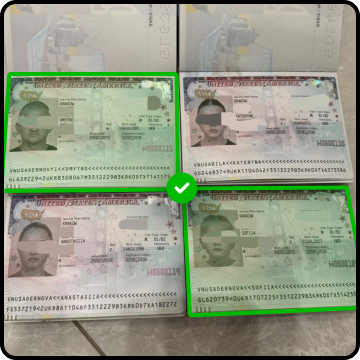
The result you came for — an approved visa in your hands.
OUR
WORK
Full support: from filling out the application to receiving your passport.

I postponed it twice — thought I would be denied. The guys found weak spots and fixed them. Visa is in my passport!
bibosinkaYOUR VISA
IS COMING SOON!
- All the bureaucracy is on us — you just attend the interview.
- Honest assessment of chances before starting work — no empty promises.
- A to Z support — from the first consultation to the stamp in the passport.
GET A FREE
CONSULTATION
We will call you back in 15 minutes — assess your chances and tell you exactly what you need.
By submitting the form, you agree to the processing
of personal data.
YOU ONLY DREAM
WE DO THE REST
From the first question «which visa fits?» to the moment
you hold the stamp in your passport
 STEP 1
We will choose
the right visa
We analyze the situation and immediately name the visa type — without unnecessary questions.
 STEP 2
We will collect
all documents
We provide an exact list for your case — nothing extra and nothing missed.
 STEP 3
Fill out the form
without mistakes
One inaccuracy = refusal. We double-check every field.
 STEP 4
Book a convenient
time
Searching for embassy slots on your own is quite a quest. We will handle it ourselves.
 MAIN
MAIN
A to Z support —
we are with you at every step
A question at 22:00? We answer. Something changed in the documents? We are already solving it. You are not left alone with the system.
 PERSONAL
Preparation with an expert
using a unique method
You will have 3 meetings with the head of the department — with a full simulation of the US Embassy interview. We know most of the consul's questions in advance and will help prepare exact answers.
GUARANTEE
We work until
the victorious end
In case of refusal, we analyze the reason, fix it, and reapply the documents — for free.
NOT AN AGENCY —
A TEAM THAT
DELIVERS RESULTS
Physical office, official contract, and a personal
manager for every case
- Office in Warsaw — you can visit in person
- We work officially, under a service contract
- We process visas for 10+ countries — we know the requirements for each
- A personal manager handles your case until the stamp
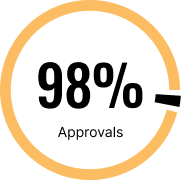
Our clients get their
visa on the first try
WHAT YOU GET WITH US
— AND WHAT YOU LOSE WITHOUT US
C VISA AGENCY
- We provide a ready-made plan — no googling or doubts
- We double-check the application — no errors, no refusals
- We know how to present finances so you are trusted
- We find a slot in days, not months
- We book a hotel without payment — your money stays with you
- In case of refusal — free resubmission and a new strategy
- We guide you to the stamp. 98% get their visa on the first try
ON YOUR OWN WITHOUT US
- You read forums for hours — and aren't sure it's right
- Mistake in the application → refusal → black mark in the embassy
- You don't know how to present finances to be trusted
- You search for a slot yourself — and wait 2–4 months
- Tickets and hotel are paid. No visa. Money is frozen
- You got a refusal — and don't know what to do next
- Time, nerves, and money — all on you. No guarantees
RESULTS WE ARE PROUD OF


EVERYTHING YOU NEED TO KNOW BEFORE APPLYING
How long does it take to get a visa?
Want to know the exact timeline for your situation? Submit a request — we will tell you within 15 minutes.
Application stages
1. Free consultation — we honestly assess your chances in 15 minutes.
2. Collecting documents — we provide an exact list for your case, nothing extra.
3. Filling out the DS-160 form — we fill it out ourselves, eliminating mistakes that most often lead to refusals.
4. Interview appointment — we book the closest available slot at the embassy in Warsaw.
5. Interview preparation — we work out the background story and practice possible questions from the consul.
6. Receiving passport with visa — the courier delivers the passport after approval.
From you: attend the consultation, provide documents, and pass the interview. Everything else is our job.
Embassy addresses
Additionally, the U.S. Consular Agency in Krakow (ul. Stolarska 9, 31-043 Kraków) can be used — but only for certain categories of applicants and by prior arrangement.
We schedule your interview ourselves for the nearest available slot — you do not need to deal with the booking system or wait for available dates for weeks.
For what purposes is such a visa needed?
• Tourism — travel, excursions, vacation.
• Visiting relatives — meeting with children, parents, spouse, friends who are already in the US (including under the U4U program).
• Medical treatment — medical procedures and consultations in US clinics.
• Business trips — negotiations, conferences, exhibitions, meetings with partners (without the right to work for hire).
• Short-term study — courses lasting up to 18 hours per week.
You can enter multiple times using the same visa throughout its validity period — up to 10 years.
Who is it suitable for?
• Entrepreneurs and business owners
• Employees — officially employed, with confirmed income
• Freelancers and remote workers — even without official employment
• Retirees — with proof of financial stability
• Mothers with children — including for trips to relatives in the US
• Students and young people — with a properly constructed background story
• Clients after a refusal or visa cancellation — with careful development of a new case
Doubting if it is right for you? Submit a request — we will honestly tell you what your chances are.
Main reasons for refusal
• Weak travel story — no clear answer as to why exactly you are going.
• Mistakes in the DS-160 form — inaccuracies, contradictions, missing fields.
• Lack of ties to the home country — no job, real estate, or family to hold you back.
• Insufficient financial stability — non-transparent or low income.
• Hesitant answers during the interview — the consul feels doubts in seconds.
• Perceived immigrant intent — close relatives in the US without properly constructed arguments.
Our job is to close all these risks before you even step up to the consul's window. That is why 98% of our clients get their visa on the first try.
Consular fee
Payment is made before the interview via bank or online payment on the official website ustraveldocs.com. We help with the correct payment process to avoid technical errors and delays in scheduling.
Important: the consular fee is a separate payment, it is not included in the cost of our services.
How long can you stay on a visa?
Important not to confuse two periods:
• Visa validity period (up to 10 years) — during this time you can enter the US as many times as you want.
• Duration of stay (up to 6 months) — how many days you can stay in the US on one specific trip. It is stamped upon entry.
For example: if the visa is valid for 10 years, you can travel to the US every six months for 3–6 months all those 10 years. But if you want to stay longer than 6 months per trip, you must apply in advance for an extension (Form I-539) within the US.
NOT SURE IF YOU WILL
GET A VISA?
This is exactly where we start. Free assessment
in 15 minutes — and you will know exactly what to do next.
- Leave a request — 1 minute
- Get your chances assessed — 15 minutes
- Get a visa — from 5 days
By submitting this form, you agree to the processing of personal data.
OTHER DESTINATIONS


At some point, ""I'll fly to America someday"" turns into a very specific plan: New York for a few days, then California, national parks, or a concert you've long wanted to cross the ocean for. And here's where the first major checkpoint appears: a US tourist visa. If required (and in most cases, it is), tickets and hotels are supplemented by a DS-160, documents, and an interview with a consular officer.
Visa Agency helps you navigate this part of the trip without having to experiment on your own or rely on someone else's experience. We analyze the specific applicant's situation, choose a location, fill out the application, help with document collection, and prepare for the interview. Our goal is to put together a case so that at the interview you understand exactly what you're proving, why you're traveling, and what questions you might be asked.
Who Can Apply for a US Tourist Visa
Not every tourist to the US starts with a DS-160. Citizens of Visa Waiver Program countries can come with an ESTA for up to 90 days if they meet the program's requirements. Others require a B-2 or a combined B1/B2 visa for regular travel. Ukraine is not included in the VWP, so for Ukrainians, the standard tourist route remains a visa-only one.
The application location isn't simply chosen based on ""where it's quickest."" The State Department recommends scheduling an interview in your country of citizenship or residence. If you're applying in your country of residence, you must prove that status. Applying in a third country is possible in some cases, but it may be more difficult to prove eligibility there, and the interview wait may be longer.
For Ukrainian citizens, under new rules effective September 2025, applications must be submitted either in their country of residence or, if they reside in Ukraine (as the US Embassy in Kyiv is not yet conducting tourist visa interviews for regular citizens), in Poland (Krakow or Warsaw).
What documents are needed for a US tourist visa?
For B-2 and B1/B2 visas, there is no universal folder that each applicant must bring to the interview. The basic set is short: a valid passport, a DS-160 confirmation page, and an appointment confirmation with the same DS-160 number, if required by the specific embassy. Do you need a paper photograph? When uploading a photo to the DS-160 failed, or upon request from the representative via email after submitting the DS-160.
Next, documents are selected based on the specific case. They may be needed to confirm the purpose of the trip, financial means, and reasons for returning after the tour. These may include:
- Proof of residency in the country of application (if applying outside the country of citizenship);
- Employment certificate, business or educational documents;
- Bank statements and proof of income;
- Documents about family and other ties to the country of residence;
- Proof of ties to relatives living in the United States;
- Documents of the person paying for the trip (if the sponsor is covering the expenses).
There is no need to purchase airline tickets in advance for the application: the State Department specifically advises against making final plans until the visa is issued. Therefore, additional paperwork is needed here not for the sake of bulk, but to confirm the information in the DS-160 and the answers the applicant will give to the consular officer.
How to Apply for a US Tourist Visa
The US application process begins with the DS-160 form, and you certainly shouldn't treat it as a formality. It's from this form that the consular officer will learn in advance where you work, where you've traveled previously, why you're coming to the US, and what you plan to do during your trip. Therefore, it's best to plan your answers in advance; correcting any discrepancies during the interview is much more inconvenient.
Once the DS-160 is submitted, the confirmation page with the barcode is saved. Then, according to the rules of the chosen mission, you pay the fee and book your interview. The State Department currently recommends that you have your visa interview in your country of citizenship or residence, and when applying locally, you must be prepared to prove this status.
For most applicants, a meeting with the consular officer remains mandatory. There are exceptions, including for some repeat B-visas, but even with a formal right to an interview exemption, a person may be summoned in person.
How is a US tourist visa interview conducted?
This is where the application form becomes more than just a form on a screen. The consul sees the DS-160 and builds the conversation around it: they can clarify why you're traveling to America, what you plan to do there, who's paying for the trip, where you work, and what ties you have to your home country. There's no standard list of questions, so memorizing the ""correct answers"" is pointless.
During the interview, it's important not to invent a more elaborate version of your trip, but to calmly explain the one already stated on the application form. If the consul needs to confirm certain statements, they may request documents. Digital fingerprinting is also typically taken as part of the process.
After the interview, the application may be approved, denied, or referred for further administrative review. Therefore, the mere conclusion of the interview does not always mean the case is closed.
How to prove the purpose of travel and ties to the country of residence
The itinerary to the United States should be clear without lengthy explanations: where you are going, for how long, what you plan to do, and why now. This does not require purchasing tickets or booking hotels in advance. What is more important is that the plans on the DS-160 match what the applicant explains at the interview.
The second part of the case remains at home. Work, study, family, housing, business, and other circumstances help demonstrate that the trip is temporary and that the person will return afterward. The State Department explicitly lists work and family ties as possible evidence of such intent.
A strong case isn't built on a single ""certificate of return,"" but on a consistent basis: the trip appears genuine, life outside the US continues during the interview, and the applicant answers the questions clearly, confidently, and without a shadow of a doubt.
Financial Requirements for a Tourist Visa
Even a large account balance alone doesn't guarantee anything. The State Department doesn't set a minimum balance for B-2 or B1/B2 visas: the consular officer needs to understand who is paying for the trip and whether that person has sufficient funds for the entire trip.
Therefore, the financial component must align with the rest of the case. Income, account balances, flight and accommodation costs, and the duration of the trip should not appear as completely different stories. If a large sum of money suddenly appears in your account before your interview, it's best to explain its origin.
The trip can also be paid for by someone else. In this case, the applicant must demonstrate who is covering the expenses and provide evidence of their financial ability to do so. However, a sponsor does not replace the applicant's own ties to the country of residence: eligibility for a visitor visa is still determined by the tourist's circumstances.
How long does it take to process a US tourist visa?
You can fill out a DS-160 this evening and schedule your interview in a few weeks or months. After all, the main wait is often for a free slot at the chosen consulate, and the State Department publishes separate waiting lists for each application location.
After the interview, the situation usually becomes clearer more quickly, but even here, the schedule cannot be guaranteed. If the application is approved without further review, the passport is returned after the visa is issued. If your case is put on administrative processing, the processing time becomes unpredictable and can significantly extend beyond the usual timeframe.
Therefore, it's wiser not to plan to ""get your visa by Friday,"" but to begin the application when your trip isn't tied to non-refundable tickets or fixed dates.
Tourist Visa Cost
Application processing for a B-2 or B1/B2 visa currently costs $185 per person. This is a non-refundable fee: if the consul denies your visa, resubmitting it means submitting a new application and an additional $185.
For some citizens, the costs don't end there. After approval, an additional reciprocity fee may apply, and starting in 2026, a visa bond will be added for passports of certain countries. The amount of the bond is $5,000, $10,000, or $15,000 and is determined by the consul during the interview. The deposit applies only to nationalities from the official list and is subsequently refunded if the conditions are met.
Therefore, the actual cost of processing depends not only on the visa category but also on the applicant's citizenship.
Why a US tourist visa might be denied
During the interview, the consul evaluates not just a single document, but the entire picture. If the DS-160, documents, and answers do not clearly define a temporary trip, the application may be denied under 214(b). Concerns may arise from an unclear purpose of the trip, weak ties to the country of residence, an unusual financial history, inconsistencies in the answers, or past violations.
A Visa Agency is involved before these questions reach the consul. We:
- We analyze the applicant's biography, visa history, and circumstances;
- We select a submission location based on citizenship and country of residence;
- We schedule an appointment at the embassy;
- We collect the key required documents for submission;
- We complete the DS-160 and verify every sensitive detail;
- We generate a DS-160 confirmation and an appointment confirmation;
- We assist with payment of consular fees;
- We evaluate work, study, business, family, and other ties outside the United States;
- We verify income, banking history, and the origin of large receipts;
- We balance the budget with the itinerary and duration of the trip;
- We prepare a clear explanation of the purpose tour;
- We look for discrepancies between the application form, documents, and the actual situation;
- We prepare for interviews without memorized ""correct answers"";
- We analyze previous refusals and determine whether reapplying now makes sense;
- We support the process until the consulate makes a decision.
The final decision remains with the consul. Therefore, our goal is to prepare the applicant so that the application is clear and approved on the first try. Schedule a consultation, and we will analyze your situation to find the best solution for your case.
CONTACTS
-
Our address Konstruktorska 11, 02-673 Warszawa
-
Email [email protected]
-
Phone number +48 573 580 955