


Answer 5 questions
and find out your real chances of getting a visa in just a few minutes.


Step 1 of 6
Step 6 of 6
Last step!
Leave your contacts and get the result
By submitting this form you agree to the processing of your personal data.
Step 6 of 6
Analyzing your answers...
Checking the details you entered
South Korea Business Visa via Poland — Turnkey with Visa Agency
Travelling to South Korea for negotiations, a conference, or a business meeting? We handle the entire process — from business documents to the electronic visa delivered to your email. We understand the specifics of applying from Poland for Ukrainians, Belarusians, and other nationalities.
WHAT DOCUMENTS
ARE NEEDED FOR THE VISA
Basic Package
- Valid passport (minimum 6 months validity)
- Proof of legal stay in Poland (visa, residence card, PESEL UKR)
- Completed visa application form (South Korean consulate form)
- Photo meeting Korean consulate requirements
- Invitation letter from a Korean company or organization
- Letter from your employer confirming the business trip
- Round-trip flight reservation
- Hotel reservation
- Motivation letter
- Business trip plan
Based on your situation
- Employees: certificate of employment indicating position, salary, and tenure, employment contract, business trip confirmation from the employer, confirmation of who pays for the trip
- Entrepreneurs and business owners: company registration documents, tax reports, contracts with Korean partners, business correspondence with the Korean party
- Freelancers: contracts with clients, bank statements confirming stable income, registration as a sole proprietor or self-employed
Additional Documents
- Previous visas to South Korea, Japan, the USA, the UK
- Travel history to EU countries
- Documents regarding family in Poland or Europe
- Bank statement for the last 3–6 months
- Real estate or rental documents in Poland
- Program of the conference or business event
- Contracts and business correspondence with the Korean party
- Registration for a business event in South Korea
- Sponsorship letter from a Korean company
Consultation
We analyze your business situation: type of employment, purpose of the trip, company documents. We select an application strategy and honestly assess your chances — even before the first payment.
Preparation of business documents
We help to correctly format the invitation letter from the Korean company and the letter from your employer — with the precise wording that covers all the consulate's questions. The Korean consulate has strict requirements for business documents.
Filling out the application
We fill out the application according to the Korean consulate's form. We double-check every field — a mistake in the application can lead to a delay or refusal.
Preparation of the full document package
We prepare the complete package: application, business invitation, employer's letter, financial documents, motivation letter, business trip plan, hotel and flight reservations, and everything else tailored to your situation.
Submission of documents to the consulate
Documents are submitted in person to the Consulate of South Korea in Warsaw. We accompany the submission and assist at every stage.
Application review
The standard review period is 5 to 7 working days. The South Korean consulate works efficiently and quickly — delays are rare with a properly prepared document package.
Visa receipt
The South Korea visa arrives electronically via email. Print it out and present it during boarding at the airport and at passport control upon entering the country.
Processing and issuance times:
- Case preparation with us: from 3 to 14 days
- Waiting for submission date: from 1 to 3 weeks
- Consulate review period: from 5 to 7 working days
- Receiving e-visa by email: 1–2 days after approval
Validity period and entry rules:
- Validity of a single-entry visa: 3 months from the date of issue
- Validity of a multiple-entry visa: up to 5 years
- Duration of stay per entry: up to 90 days
- Working for a Korean company on a business visa is prohibited
- Electronic visa — print and present at the airport
- Entry is possible only during the visa validity period
Consulate of South Korea in Warsaw
YOUR
VISA
The result you came for — an approved visa in your hands.

OUR
WORK
Full support: from filling out the application to receiving your passport.

I postponed it twice — thought I would be denied. The guys found weak spots and fixed them. Visa is in my passport!
bibosinkaYOUR VISA
IS COMING SOON!
- All the bureaucracy is on us — you just attend the interview.
- Honest assessment of chances before starting work — no empty promises.
- A to Z support — from the first consultation to the stamp in the passport.
GET A FREE
CONSULTATION
We will call you back in 15 minutes — assess your chances and tell you exactly what you need.
By submitting the form, you agree to the processing
of personal data.
YOU ONLY DREAM
WE DO THE REST
From the first question «which visa fits?» to the moment
you hold the stamp in your passport
 STEP 1
We will analyze your
business situation
Employee, entrepreneur, or freelancer — everyone has their own strategy. We analyze and immediately tell you what exactly you need.
 STEP 2
We will prepare
business documents
The Korean consulate has strict requirements for business documents. We draft the invitation letter from the Korean company and the employer letter so the consulate sees a clear business purpose.
 STEP 3
We will fill out the application
and prepare documents
One mistake in the application means a delay or refusal. We do everything ourselves and double-check twice.
 STEP 4
We will accompany the
consulate submission
We accompany the document submission to the South Korean consulate in Warsaw — assisting at every stage.
 MAIN
MAIN
A to Z support —
we are with you at every step
A question at 10:00 PM? We answer. The consulate requested additional documents? We are already preparing them. You are not left alone with the system.
 PERSONAL
Individual approach
to each case
Ukrainian, Belarusian, freelancer, or business owner — everyone has their own strategy. We choose the approach that works specifically in your situation.
GUARANTEE
We work until
the result
In case of refusal, we analyze the reason, eliminate it, and reapply — for free.
NOT AN AGENCY —
A TEAM THAT
DELIVERS RESULTS
Physical office, official contract, and a personal
manager for every case
- Office in Warsaw — you can visit in person
- We work officially, under a service contract
- We process visas for 10+ countries — we know the requirements for each
- A personal manager handles your case until the stamp
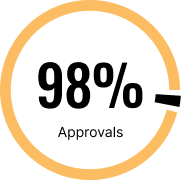
Our clients get their
visa on the first try
WHAT YOU GET WITH US
— AND WHAT YOU LOSE WITHOUT US
C VISA AGENCY
- We provide a ready-made plan — no googling or doubts
- We double-check the application — no errors, no refusals
- We know how to present finances so you are trusted
- We find a slot in days, not months
- We book a hotel without payment — your money stays with you
- In case of refusal — free resubmission and a new strategy
- We guide you to the stamp. 98% get their visa on the first try
ON YOUR OWN WITHOUT US
- You read forums for hours — and aren't sure it's right
- Mistake in the application → refusal → black mark in the embassy
- You don't know how to present finances to be trusted
- You search for a slot yourself — and wait 2–4 months
- Tickets and hotel are paid. No visa. Money is frozen
- You got a refusal — and don't know what to do next
- Time, nerves, and money — all on you. No guarantees
RESULTS WE ARE PROUD OF


EVERYTHING YOU NEED TO KNOW BEFORE APPLYING
Do I need a separate business visa for South Korea or is a tourist visa enough?
Do Ukrainians and Belarusians need a business visa for South Korea?
Is an invitation from a Korean company mandatory?
What should be included in the invitation letter from a Korean company?
Do I need a letter from my employer if I am going on a business trip?
Can a sole proprietor or business owner get a business visa to South Korea?
Can I work in South Korea on a business visa?
Can I apply for a business visa while in Poland?
How much does a business visa to South Korea cost?
For how long is a business visa to South Korea issued?
How long does it take to get a business visa to South Korea?
How do I receive the South Korean business visa?
Can I combine business and tourist purposes in one trip?
What are the main reasons for a business visa refusal to South Korea?
What should I do if I already had a Korean visa refusal?
Does a residence card (karta pobytu) or UKR PESEL in Poland affect the chances?
Does having a Japanese or US visa affect getting a Korean business visa?
Do I need to buy flight tickets before getting the visa?
Is the history of previous business trips considered when applying?
Can I apply for a business visa to South Korea without knowing English?
NOT SURE IF YOU WILL
GET A VISA?
This is exactly where we start. Free assessment
in 15 minutes — and you will know exactly what to do next.
- Leave a request — 1 minute
- Get your chances assessed — 15 minutes
- Get a visa — from 5 days
By submitting this form, you agree to the processing of personal data.
OTHER DESTINATIONS


You can fly to South Korea under the same contract for two completely different visa purposes. Discussing the supply of equipment and signing the contract is a business trip. Flying back to install or service the equipment is short-term work. In the first case, a C-3-4 visa is usually suitable, while in the second, a C-4 visa is required.
Therefore, the term ""business visa to South Korea"" is too broad. The consulate cares about what the person will do after entry, and an error in the visa category can ruin the entire application. When a client contacts Visa Agency, we discuss the purpose of the trip, the invitation, the applicant's responsibilities, and whether they can apply from their country of residence, and then put together a package tailored to their specific case.
What is a business visa to South Korea and who is it suitable for?
In the Korean system, a C-3-4 visa refers to a Short-Term Business Visa. This is a short-term category for individuals coming to the country for business, but not working for a Korean company or performing paid work locally. The permitted stay under the C-3 visa is typically no more than 90 days.
The C-3-4 visa is suitable when the applicant's primary employment or business remains outside of Korea, and the visit is for a temporary commercial purpose. If the individual is paid specifically for work in Korea or is actually traveling to provide services, a different category, usually the C-4, is required. Citizens of some countries may not need a separate C-3-4 visa at all due to the K-ETA or visa-free regime.
Who can apply for a business visa to South Korea?
The C-3-4 visa has an important feature: it is tied to the Korean host. The Korea Visa Portal specifically applies it to foreigners invited by a South Korean company. Therefore, a single job title or ""business"" entry is not required. The application form isn't sufficient.
Both business owners and employees can apply. The main thing is that the documents clearly indicate the applicant's organization and business ties with the Korean side. Therefore, consulate requirements often include proof of employment or business ownership, as well as documents from the inviting company.
If a person applies in a country other than their country of citizenship, additional requirements regarding the length and basis of local residence may apply. These should be verified with the specific consulate.
What are the purposes of a business visa?
The C-3-4 visa has a very specific logic: the person is not coming to work for the Korean company, but to resolve a commercial issue between the parties. In simple terms, they are not looking for a job and receiving a salary, but rather negotiating, participating in conferences, etc. Therefore, the requirements for this category include a very specific range of tasks:
- Researching the Korean market;
- Business meetings and consultations;
- Negotiations with partners;
- Agreeing and signing contracts;
- Small international trade transactions;
- Other short-term commercial activities without employment or remuneration for work in Korea.
There is a nuance regarding events: some Korean consulates classify conferences, exhibitions, or seminars as C-3-1 rather than C-3-4. Therefore, applying for a business visa simply because the trip is business-related is not enough: you must first determine which category best suits your visit.
What documents are needed for a business visa to South Korea?
You can't simply take a C-3-4 checklist from one Korean consulate and assume it's suitable for any country. The Korea Visa Portal directly directs applicants to the requirements of a specific diplomatic mission, and the consulates themselves supplement the basic package with their own terms and conditions.
However, differences in detail do not negate the general framework. For this type of visa, it is usually necessary to confirm both the applicant's status and their connection to the Korean side:
- Passport, completed application form, and photograph;
- Proof of legal residence in the country of application (if the applicant does not live in the country of citizenship);
- Employment certificate or documents confirming own business;
- An invitation from a Korean company indicating the Business Registration Number (this number must also be indicated in the applicant's application);
- Registration documents of the inviting party;
- Contract, invoices, delivery documents, or other proof of business relations;
- Financial documents, if required by the selected consulate (Mandatory confirmation of a certain amount in the bank balance if the applicant is sponsoring their trip);
- Information about the flight, accommodation, and itinerary, when they are included in Local list.
It's important to check the residency clause in the country of application in advance. Some diplomatic missions have their own requirements for local residence permits. For example, the consulate may consider not only the availability of the document, but also its type or the period for which it was issued.
Additionally, a complete transaction history for the applicant's account, a letter of guarantee, tax documents from the Korean company, translations, or originals of individual documents may be required.
What should an invitation from a South Korean company look like?
The invitation is prepared by the Korean side, and it is important that it not be separate from the rest of the package. If the application form states one purpose, the contract states another, and the letter from the host company contains a third version of the trip, the consulate will naturally have questions.
To enable the letter to be compared with the documents of the applicant and their company, it usually includes the following:
- Full name and contact information of the Korean company;
- Information about the invited applicant;
- Purpose and dates of the visit;
- The nature of the business relationship between the parties;
- A brief plan of business activities in Korea;
- Details of travel and accommodation expenses, if the host party is covering the costs.
There is no standard form for all consulates. Some diplomatic missions may require a letter and a copy of the company registration, while others may additionally require a letter of guarantee, a notarized copy, or originals. Therefore, the application package from the Korean partner is checked against the requirements of the specific application location.
How to apply for a business visa to South Korea
The word ""electronic"" can easily confuse the Korean application process. A standard e-Form on the Korea Visa Portal does not mean the entire process is completed online: the PDF application can be completed electronically or printed and completed by hand, after which it is submitted along with other documents to the Korean embassy or consulate. The full e-Visa C-3-4 is only available to certain applicants who meet special conditions.
Before submitting, you should check which consulate accepts applications in your area of residence and what requirements they have for foreigners with a local residence permit. The further procedure depends on the chosen mission: you may need to make an appointment, submit in person, and pay the fee on-site.
After review, your status is checked through the Korea Visa Portal. If approved, the applicant prints the Visa Grant Notice and takes it along with their passport on the trip.
How to prove the business purpose of the trip
For C-3-4, it is important that the documents of both parties tell the same story. The dates, participants, and reason for the visit in the invitation must match the application form, the employer's letter, and the travel itinerary.
Business ties are supported by contracts, invoices, correspondence, and documentation of deliveries or previous transactions. If the collaboration is just beginning, it is worth showing where the contact originated and why the meeting requires in-person attendance. This way, the consulate sees the specific reason for the trip, not just the abstract ""business.""
How long does it take to process a business visa to South Korea?
The processing time depends greatly on where the application is submitted. In Poland, the embassy estimates a processing time of approximately 7-10 business days, in Ukraine - at least 5 business days, and KVAC centers in Berlin, Paris, London, and The Hague warn that once the case is submitted to the embassy, processing can take up to 3 weeks.
If the consulate requires additional documents or verification, the wait time will increase. Therefore, it is better to follow the rules of the chosen location rather than a single figure for all of Europe.
Business Visa Cost
The basic consular fee for a single-entry visa valid for up to 90 days is USD 40. However, for South Korea, this amount is not universal: the fee depends on citizenship, the number of entries, and agreements between the countries.
Citizens of Ukraine are exempt from the visa fee. Applicants with other passports should check the fees according to the rules of the chosen consulate: due to the principle of reciprocity, it may differ from the basic rate. Visa center services, document forwarding, and other service costs may be charged separately.
Why a South Korean business visa might be denied
It's especially dangerous for a business visa application when the travel documents make it look like work in Korea. If the applicant intends to be paid on-site, perform contracted services, or actually work for a Korean company, C-3-4 may be the wrong category.
Questions also arise when the invitation does not explain the purpose of the visit, the business connection between the companies is not confirmed, and the application form, travel itinerary, and documents of the parties are inconsistent.
To mitigate these risks, Visa Agency undertakes:
- Verifying the purpose of the trip and the appropriate visa category;
- Selection of the application location based on citizenship and residence status;
- Scheduling an appointment at the embassy;
- Displaying invitation templates;
- Preparing the application form and employer letter;
- Checking financial and business documents;
- Preparing the travel plan and reservations, motivational Letters;
- Checking the complete package before submitting;
- Providing support for additional consular inquiries;
- Reviewing the refusal and preparing a resubmission.
The decision is ultimately made by the consulate. Our goal is to identify weaknesses in advance and build a clear case. Schedule a consultation, and we will discuss your situation individually!
CONTACTS
-
Our address Konstruktorska 11, 02-673 Warszawa
-
Email [email protected]
-
Phone number +48 573 580 955