


Answer 5 questions
and find out your real chances of getting a visa in just a few minutes.


Step 1 of 6
Step 6 of 6
Last step!
Leave your contacts and get the result
By submitting this form you agree to the processing of your personal data.
Step 6 of 6
Analyzing your answers...
Checking the details you entered
U.S. visa for a child through Poland — turnkey service by Visa Agency
Planning a trip to the United States with your child? A child visa has its own specifics — we handle the entire process from documents to the visa in the passport.
WHAT DOCUMENTS
ARE NEEDED FOR THE VISA
Main documents
- Child’s passport valid for at least 6 months
- Child’s birth certificate (original + English translation)
- Passports of both parents
- Proof of legal stay in Poland (visa, residence card, PESEL UKR)
- Completed DS-160 form for the child with confirmation and barcode
- 5×5 cm photo according to U.S. embassy requirements
- Proof of MRV fee payment ($185)
Additional documents
- Child traveling with both parents:
- Standard family document package
- Visas are submitted together for all family members
- Child traveling with one parent:
- Notarized consent from the second parent for the child’s trip to the U.S.
- Documents confirming the right of one parent to make decisions
- Child traveling without parents:
- Notarized consent from both parents
- Documents of the accompanying person
- Proof of family relationship with the accompanying person
- Single parent:
- Death certificate of the second parent or court decision granting sole custody
Additional supporting documents
- Parents’ marriage certificate
- School certificate confirming the child studies and will return
- Previous U.S., UK, or Canadian visas of the child or parents
- Documents proving ties to Poland or Europe
- Parents’ bank statements
- Property ownership or rental documents in Poland
- Invitation letter from the host in the United States
Consultation
We analyze your family situation: who the child is traveling with and the family’s legal status in Poland. We build the right strategy and honestly assess the chances before any payment.
Preparation of permissions and consents
We help properly prepare notarized consent from the second parent if the child is traveling without them. We also translate the birth certificate into English. Without these documents the embassy will not accept the application.
Completing the DS-160 form
We complete the DS-160 application for the child on the official U.S. embassy website. All information is entered accurately and without mistakes. After completion you receive confirmation with a barcode.
Paying the consular fee
The $185 MRV fee must be paid for each applicant including children. It is non-refundable even in case of refusal. We help complete the payment correctly through the official system.
Scheduling the interview
We schedule the whole family for an interview at the U.S. Embassy in Warsaw or the Consulate in Kraków at a convenient time.
Preparing the full document package
We prepare the full package: forms, translated birth certificate, parental consents, financial documents, and everything else required for your specific situation.
Interview preparation
We conduct two interview preparation sessions for parents. The consul may ask questions about the child — we prepare clear and convincing answers.
Receiving the decision
The decision is announced immediately after the interview. If approved, the passport with the visa is delivered by courier within 3–5 business days.
Processing and issuance time:
- Case preparation with us: from 5 to 10 days
- Waiting time for the interview: from 1 to 3 weeks
- Visa decision: announced immediately after the interview
- Passport delivery after approval: 3–5 business days by courier
Visa validity and entry rules:
- Visa validity: from 1 to 10 years depending on the child’s age and the consul’s decision
- Entries: multiple-entry visa
- Maximum stay per entry: up to 6 months
U.S. Embassy in Warsaw
U.S. Consulate in Kraków
YOUR
VISA
The result you came for — an approved visa in your hands.

OUR
WORK
Full support: from filling out the application to receiving your passport.

I postponed it twice — thought I would be denied. The guys found weak spots and fixed them. Visa is in my passport!
bibosinkaYOUR VISA
IS COMING SOON!
- All the bureaucracy is on us — you just attend the interview.
- Honest assessment of chances before starting work — no empty promises.
- A to Z support — from the first consultation to the stamp in the passport.
GET A FREE
CONSULTATION
We will call you back in 15 minutes — assess your chances and tell you exactly what you need.
By submitting the form, you agree to the processing
of personal data.
YOU ONLY DREAM
WE DO THE REST
From the first question «which visa fits?» to the moment
you hold the stamp in your passport
 STEP 1
We’ll review your
family situation
Who the child is traveling with, whether consent from the second parent is required, and which documents are needed in your case — we analyze everything and immediately provide a clear plan.
 STEP 2
We’ll prepare all
permissions and translations
Notarized consent from the second parent and translation of the birth certificate into English — without these documents the embassy will not accept the application. We prepare everything correctly.
 STEP 3
We’ll complete DS-160
for the child without mistakes
A child’s application has its own specifics. One mistake can lead to refusal. We handle everything ourselves and double-check every detail.
 STEP 4
We’ll schedule the whole family
for the interview
Finding an embassy appointment slot for the entire family on your own can be a real challenge. We take care of it for you.
 MAIN
Full support from A to Z —
we stay with you at every step
Question at 10 PM? We reply. The consul requested additional documents? We are already preparing them. You are never left alone with the system.
 PERSONAL
Two interview
preparation sessions
During the interview the consul will definitely ask about the child — the purpose of the trip, who will take care of them, and whether you plan to return. We prepare clear and convincing answers in advance.
GUARANTEE
We work until
you get the result
If you receive a refusal, we analyze the reason, fix the issue, and reapply free of charge.
NOT AN AGENCY —
A TEAM THAT
DELIVERS RESULTS
Physical office, official contract, and a personal
manager for every case
- Office in Warsaw — you can visit in person
- We work officially, under a service contract
- We process visas for 10+ countries — we know the requirements for each
- A personal manager handles your case until the stamp
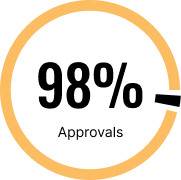
Our clients get their
visa on the first try
WHAT YOU GET WITH US
— AND WHAT YOU LOSE WITHOUT US
C VISA AGENCY
- We provide a ready-made plan — no googling or doubts
- We double-check the application — no errors, no refusals
- We know how to present finances so you are trusted
- We find a slot in days, not months
- We book a hotel without payment — your money stays with you
- In case of refusal — free resubmission and a new strategy
- We guide you to the stamp. 98% get their visa on the first try
ON YOUR OWN WITHOUT US
- You read forums for hours — and aren't sure it's right
- Mistake in the application → refusal → black mark in the embassy
- You don't know how to present finances to be trusted
- You search for a slot yourself — and wait 2–4 months
- Tickets and hotel are paid. No visa. Money is frozen
- You got a refusal — and don't know what to do next
- Time, nerves, and money — all on you. No guarantees
RESULTS WE ARE PROUD OF


EVERYTHING YOU NEED TO KNOW BEFORE APPLYING
What documents does a child need for a U.S. visa?
Does a child need a separate DS-160 form?
Does the child need to attend the interview?
Is consent from the second parent required?
What if one parent is absent?
Does the birth certificate need to be translated?
Can the whole family apply together?
How much does a child’s visa cost?
How long is a child’s visa issued for?
Can a child get a visa if the parents do not have one?
Do I need to book flights and hotels?
What questions are asked about the child during the interview?
Does the child need a separate photo?
Can a child get a visa without being present in person?
What if the parents are divorced?
Do parents’ visas affect the child’s application?
How long does the child visa process take?
Can a child study in the U.S. on a tourist visa?
What are the main reasons for refusal of a child visa?
What should I do if there was already a refusal?
NOT SURE IF YOU WILL
GET A VISA?
This is exactly where we start. Free assessment
in 15 minutes — and you will know exactly what to do next.
- Leave a request — 1 minute
- Get your chances assessed — 15 minutes
- Get a visa — from 5 days
By submitting this form, you agree to the processing of personal data.
OTHER DESTINATIONS


The parents' US visas are still valid for several years. Now they're planning to travel to the US with their child, who has never been overseas. Adults don't need to reapply, but a US visa for the child is processed separately, even if the child is only a few months old and will spend the entire vacation with their parents.
Children's documents raise questions that parents might not have encountered when applying. Who signs the application? How do you prove the relationship? What if one parent stays home? Visa Agency helps you navigate these circumstances, gather evidence, and prepare for the consular process without any confusion.
What visa does a child need to travel to the US?
Visiting relatives and enrolling in an American school have different visa requirements. A separate ""for children"" category is not available. No: the required visa type is determined by the purpose of the trip, and the child's citizenship determines whether a visa is required.
For vacations, family trips, or visiting relatives, a B-2 or combined B1/B2 visa is typically issued. This visa is suitable for recreation and short recreational activities, but not for full-time school attendance.
If a child is traveling to school, an F-1 visa may be required. However, attending a public elementary school with an F-1 visa is not possible. When a family follows a parent who is studying or working in the United States, the appropriate category is considered for family members.
Citizens of Visa Waiver Program countries have another option: for a short, suitable trip, they can obtain an ESTA instead of a visa.
At what age does a child need a separate US visa?
There are no age restrictions for the B1/B2 visa. A sixteen-year-old teenager and a one-month-old infant will both require a visa if their citizenship requires a visa for travel. Even valid U.S. visas from their parents don't change this: children cannot enter on them.
The child will need their own passport. A separate application must be submitted and a visa fee must be paid – for B1/B2 visas, this is $185, regardless of age. A family appointment does not consolidate the application, and a visa for one child does not guarantee issuance to the other.
For citizens of Visa Waiver Program countries, an ESTA may be suitable instead of a visa. However, there is no family option: a separate permit is required for each passenger, including infants.
How to complete the DS-160 form for a child
It's easy to make mistakes in family details on a child's DS-160: mix up the accompanying person's details, list the wrong person paying for the trip, or forget about the child's previous visa. Before completing the form, it's best to gather the following:
- The child's passport and birth certificate for verification;
- The parents' contact information and information about accompanying persons;
- The intended route and address in the United States, if known;
- Information about the child's previous U.S. visas and travel history.
The form must be completed in English and an electronic photo must be uploaded. A parent or guardian can sign the DS-160 for a child under 16; a separate application is still required for each child. After submitting, save the page with the barcode; it will be presented during the visa application process.
Does a child need an interview at the US Embassy?
Previously, children under 14 often did not need to appear at the consulate. Effective September 2, 2025, the procedure has changed: when applying for a B1/B2 visa, an in-person interview is generally required, regardless of age. Having a U.S. visa for a parent does not exempt the child from the interview.
This does not mean that a three-year-old child will have to explain their family plans. The consular officer may direct questions about the route, travel time, and expenses to the accompanying adult. The teenager may be asked about their relationship to the accompanying adult, their studies, relatives in the United States, or plans for return. Here, clear answers are more important than a memorized story.
A parent or guardian usually brings the child to the interview. It's worth checking in advance on the website of the specific consulate who is allowed to attend the interview with the minor and what documents the accompanying person needs.
Can a child obtain a US visa without their parents?
Yes. Parents do not need to have valid US visas. A child can travel, for example, to visit relatives or to a competition with an accompanying person. In this case, the consular officer should be informed who is responsible for their care during the trip and in the US, where they will be staying, and who will cover the expenses.
The itinerary, contact information of the host, the accompanying person's details, and the financial documents of the parents or sponsor will be helpful. If the parents are staying at home, it's a good idea to prepare their written consent and birth certificate. There is no uniform requirement for notarized consent for every child's trip in the United States, but it may be required when leaving another country or according to airline regulations.
An invitation from relatives alone does not guarantee a visa. The application must clearly state the purpose and duration of the visit, as well as the reasons for returning home, such as family and study.
Can a child get a visa if only one parent is traveling?
Yes. The other parent does not have to travel to the United States or obtain a visa with the child. However, it is important to prepare documents in advance that clarify who is accompanying the minor and what rights the adult has with respect to the child.
A birth certificate is usually useful. If the last names are different, documents certifying the last name change may be required. In cases of sole custody or the death of the other parent, a corresponding court decision or certificate is prepared.
The United States does not require notarized consent from the other parent for every trip. However, it is advisable to have one: such permission may be required when leaving your country of residence or during a transfer. It's especially important to check the rules carefully if the parents are divorced or there is a custody dispute.
How Visa Agency Helps Obtain a US Visa for a Child
The mother and child have different last names, the father remains at home, and the grandmother in the US covers the travel expenses. Each of these details can be explained to the consular officer, but first, it's important to understand what documents this particular family will need. This is where Visa Agency begins preparation.
Next, specialists help:
- Check where the family is eligible to submit documents based on citizenship and country of residence;
- Collect proof of kinship, guardianship, travel funding, and child support;
- Prepare translations and parental consents, when necessary, without unnecessary notarized documents;
- Complete a separate DS-160 for the child and verify that the information matches the parents' statements;
- Pay the visa fee, schedule an interview, and prepare the adults and child for the consular officer's questions;
- Review previous refusals or requests for additional documents, if any;
- Analyze the unsuccessful interview, providing recommendations for the future Re-application.
There is also a requirement for family applications: if at least one parent applies at the same time, Visa Agency services for children under 14 are free. The government visa fee is paid separately for each applicant.
Is your child traveling with you, the other parent, or visiting relatives without you? Submit your application and tell us who is accompanying them, where the family lives, and when the trip is planned. A specialist will compile a list of documents and explain the next steps.
CONTACTS
-
Our address Konstruktorska 11, 02-673 Warszawa
-
Email [email protected]
-
Phone number +48 573 580 955