


Answer 5 questions
and find out your real chances of getting a visa in just a few minutes.


Step 1 of 6
Step 6 of 6
Last step!
Leave your contacts and get the result
By submitting this form you agree to the processing of your personal data.
Step 6 of 6
Analyzing your answers...
Checking the details you entered
South Korea Visitor Visa via Poland — Turnkey with Visa Agency
Visiting relatives or friends in South Korea? We handle the entire process — from the invitation letter to receiving your electronic visa by email. We understand the specifics of applying from Poland for Ukrainians, Belarusians, and other nationalities.
WHAT DOCUMENTS
ARE NEEDED FOR THE VISA
Basic Package
- Passport (valid for at least 6 months)
- Proof of legal stay in Poland (visa, residence permit, PESEL UKR)
- Completed visa application form (South Korea consulate form)
- Photo meeting Korean consulate requirements
- Invitation letter from the host in South Korea
- Proof of the host's status in South Korea
- Round-trip flight reservation
- Hotel reservation
- Motivation letter
- Travel itinerary
Depending on Your Situation
- Employed applicants: employment certificate with position, salary and work experience, employment contract, proof of paid leave
- Students: certificate from educational institution, student ID, proof of tuition payment
- Entrepreneurs: company registration documents, tax reports, contracts with clients
Additional Documents
- Previous visas to South Korea, Japan, the USA, and the UK
- Travel history to EU countries
- Documents confirming family ties in Poland or Europe
- Bank statement for the last 3–6 months
- Property ownership documents or housing rental agreement in Poland
- Proof of relationship with the host (messages, photos, meeting history)
- Financial documents of the host in South Korea
- Sponsorship letter
Consultation
We analyze your situation: legal status in Poland, relationship with the host, and financial position. We select the best application strategy and honestly assess your chances before any payment.
Invitation Preparation
We help the host prepare the invitation letter correctly, including the required wording, proof of status in South Korea, and financial obligations. For a Korean visitor visa, the invitation is a key document and must meet strict requirements.
Application Form Completion
We complete the Korean consulate application form and double-check every field. Even a small mistake can lead to delays or refusal.
Full Document Package Preparation
We prepare the entire package: application form, invitation letter, financial documents, proof of relationship with the host, motivation letter, flight reservations, and everything else required for your case.
Submission to the Consulate
Documents are submitted in person to the South Korean Consulate in Warsaw. We guide and support you throughout the process.
Application Review
Standard processing time is 5–7 business days. The South Korean Consulate works efficiently, and delays are rare when the application package is prepared correctly.
Visa Issuance
Your South Korean visa is issued electronically and sent by email. Print it out and present it at airport check-in and immigration control upon arrival.
Processing Timeline:
- Case preparation with us: from 3 to 14 days
- Waiting for an appointment: from 1 to 3 weeks
- Consulate processing time: 5–7 business days
- Receiving the e-visa by email: 1–2 days after approval
Validity and Entry Rules:
- Single-entry visa validity: 3 months from the date of issue
- Multiple-entry visa validity: up to 5 years
- Maximum stay per entry: up to 90 days
- The visa is electronic — print it and present it at the airport
- Entry is allowed only during the visa validity period
South Korean Consulate in Warsaw
YOUR
VISA
The result you came for — an approved visa in your hands.

OUR
WORK
Full support: from filling out the application to receiving your passport.

I postponed it twice — thought I would be denied. The guys found weak spots and fixed them. Visa is in my passport!
bibosinkaYOUR VISA
IS COMING SOON!
- All the bureaucracy is on us — you just attend the interview.
- Honest assessment of chances before starting work — no empty promises.
- A to Z support — from the first consultation to the stamp in the passport.
GET A FREE
CONSULTATION
We will call you back in 15 minutes — assess your chances and tell you exactly what you need.
By submitting the form, you agree to the processing
of personal data.
YOU ONLY DREAM
WE DO THE REST
From the first question «which visa fits?» to the moment
you hold the stamp in your passport
 STEP 1
Let’s review your
situation
We analyze your legal status in Poland, relationship with the host, and financial situation. We immediately explain your chances and what is required for your case.
 STEP 2
We help with the
invitation
The Korean Consulate has strict requirements for invitation letters. We help the host prepare it correctly so the consulate has no unnecessary questions.
 STEP 3
We complete the application
and prepare documents
One mistake in the application can lead to delays or refusal. We handle everything and double-check every detail.
 STEP 4
We assist with submission
to the consulate
We guide you through the document submission process at the South Korean Consulate in Warsaw and support you at every stage.
 MAIN
MAIN
Full support from start to finish —
we are with you every step of the way
Question at 10 PM? We reply. The consulate requested additional documents? We are already preparing them. You are never left alone with the process.
 PERSONAL
Individual approach
to every case
Whether you are Ukrainian, Belarusian, a freelancer, or an employee, every case requires a different strategy. We choose the approach that works best for your situation.
GUARANTEE
We work until
the result is achieved
If your visa is refused, we analyze the reason, fix the issue, and submit a new application free of charge.
NOT AN AGENCY —
A TEAM THAT
DELIVERS RESULTS
Physical office, official contract, and a personal
manager for every case
- Office in Warsaw — you can visit in person
- We work officially, under a service contract
- We process visas for 10+ countries — we know the requirements for each
- A personal manager handles your case until the stamp
Our clients get their
visa on the first try
WHAT YOU GET WITH US
— AND WHAT YOU LOSE WITHOUT US
C VISA AGENCY
- We provide a ready-made plan — no googling or doubts
- We double-check the application — no errors, no refusals
- We know how to present finances so you are trusted
- We find a slot in days, not months
- We book a hotel without payment — your money stays with you
- In case of refusal — free resubmission and a new strategy
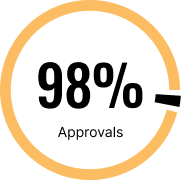
- We guide you to the stamp. 98% get their visa on the first try
ON YOUR OWN WITHOUT US
- You read forums for hours — and aren't sure it's right
- Mistake in the application → refusal → black mark in the embassy
- You don't know how to present finances to be trusted
- You search for a slot yourself — and wait 2–4 months
- Tickets and hotel are paid. No visa. Money is frozen
- You got a refusal — and don't know what to do next
- Time, nerves, and money — all on you. No guarantees
RESULTS WE ARE PROUD OF


EVERYTHING YOU NEED TO KNOW BEFORE APPLYING
Do Ukrainian and Belarusian citizens need a visitor visa to South Korea?
Is an invitation required for a South Korea visitor visa?
What should be included in the invitation letter?
Does the host’s status in South Korea affect the decision?
Can I apply for a South Korea visa while living in Poland?
Do I need a hotel reservation for a visitor visa?
Is a detailed itinerary required for a visitor visa?
How much does a South Korea visitor visa cost?
How long does it take to obtain a visitor visa to South Korea?
How long is a South Korea visitor visa valid?
How long can I stay in South Korea with a visitor visa?
Can I work in South Korea with a visitor visa?
How is the South Korea visitor visa issued?
Do I need to purchase flight tickets before receiving the visa?
How much money should I have in my bank account?
What are the main reasons for refusal of a South Korea visitor visa?
What should I do if I have already been refused a Korean visa?
Does having a residence permit or PESEL UKR in Poland improve my chances?
Does having a Japanese or US visa help when applying for a Korean visa?
Can I apply for a South Korea visa without knowing English?
NOT SURE IF YOU WILL
GET A VISA?
This is exactly where we start. Free assessment
in 15 minutes — and you will know exactly what to do next.
- Leave a request — 1 minute
- Get your chances assessed — 15 minutes
- Get a visa — from 5 days
By submitting this form, you agree to the processing of personal data.
OTHER DESTINATIONS


""Come on over, I'll show you Seoul"" sounds like an offer you can't refuse. Once you've found accommodation and a list of places is piling up on your phone, it's easy to jump straight to your itinerary. But first, it's worth checking something more prosaic: whether you need a visitor visa to South Korea. If you do, the trip turns into a rather complex quest, where the outcome depends on your citizenship, the place of application, your relationship with the inviting party, and dozens of details in the documents.
At this stage, the Visa Agency gets involved. Our job is to guide the idea of ""visiting your friends in Korea"" through the entire visa process until the consulate makes a decision. We analyze a specific case, determine the appropriate application process, gather documents from both parties, and support the process so that the applicant doesn't have to navigate each new requirement and question on their own.
What is a visitor visa to South Korea and who is eligible for it?
The phrase ""visiting my family"" is too vague for the consulate. While visiting parents, a sister, a university friend, or an acquaintance from Seoul can all be for the same reason, such trips may be processed according to different rules. That's why the common name ""visitor visa"" explains the purpose of the trip rather than designating a specific category.
Otherwise, it's simpler: it's a short visit without work or earnings in Korea. Such trips are typically limited to 90 days. The specific C-3 visa type and documents depend on who is inviting you and the requirements at the place of application.
Who can apply for a visitor visa to South Korea
The mere fact that you are expected in Korea doesn't answer the question of whether a visa is required. First, they look at your passport. Citizens of some countries can come for a short private visit without a C-3 visa, while Ukrainians with a regular passport require a short-term visa to visit relatives or friends.
There's also a second factor: where you currently live. Applications are typically submitted through the Korean embassy or consulate in your place of residence. If you hold a passport from one country and live in another, the embassy may request proof of legal status and apply its own requirements to your application. Therefore, it's better to check the application location before inviting the host to a documentary quest.
What documents are needed for a visitor visa to South Korea?
It's easy to make a mistake with the documents even before applying: find someone else's checklist and assume it's suitable for everyone. But someone living in France traveling to visit their sister may need a different package than an applicant from another country visiting a friend. Requirements are influenced by citizenship, the application location, the relationship with the host, and who is paying for the trip.
But despite all the differences, the consulate needs to understand who is applying, what the person does at home, how much money they are traveling with, and whether the stated purpose of the trip actually matches their stated purpose. Therefore, the package usually includes:
- A valid passport;
- Proof of legal residence in the country of application (if required by the embassy);
- Visa application and photograph;
- Documents on work, study, pension, or business;
- Financial evidence (required for a certain amount set by the embassy);
- Itinerary for your stay in South Korea;
- An invitation from relatives in Korea (using a specific template provided by the embassy);
- Documents of kinship or materials confirming the relationship with a friend or acquaintance;
- Information on the place of residence;
- Round-trip flight reservations (if required by the place of application).
By In some situations, an employment contract, vacation confirmation, business documents, a sponsorship or explanatory letter, and other materials may be required.
In any case, the final list should be verified specifically for the mission through which the application will be submitted. Moreover, the official Korea Visa Portal specifically recommends checking documents against the requirements of the specific diplomatic mission.
What documents does the inviting party provide?
While the applicant is gathering their part of the package, the person in Korea is not ""just a name on an application."" It is important for the consulate to understand who the guest is, where they live, and what role they will assume during the trip. If the guest is paying for themselves, fewer documents may be required. If the host is also funding the visit, its portion becomes broader.
Depending on the category and location of application, the following may be required:
- An invitation with information on both sides, the purpose and duration of the trip;
- A copy of the passport, Korean ID card, or foreign resident card;
- Proof of residential address in Korea;
- A letter of guarantee;
- Financial documents, if the inviting party is covering the expenses;
- Proof of relationship, if related to family.
There is (again) no standard set of requirements for all consulates. In some cases, an invitation and a document from the host will suffice; in others, the originals, notarization, or a separate guarantee form will be required.
How to apply for a visitor visa to South Korea
Korea has a Visa Portal, but the ""fill out online"" button doesn't mean the entire process will be done online. For short-term C-3 visas, you can enter the information in advance into an electronic form and print the application. Alternatively, you can fill it out by hand and then submit it to the Korean consulate. A full e-Visa is only available for a limited number of cases.
The rest of the process depends on the country of application. Some countries require an appointment, others have their own local rules for accepting documents, and the availability of a representative is also determined by the specific consulate. Therefore, they first select the consulate closest to their place of residence and check its procedures, and then prepare the application form, passport, photographs, and other documents for this itinerary.
How to confirm the purpose of the trip and connection with the inviting person
With a relative, evidence is usually kept in a document folder: birth certificates, marriage certificates, and other documents allow for reestablishing family ties. With a friend, there is no such folder, so the relationship must be demonstrated differently. The official requirements of some consulates include joint photographs, correspondence, letters, call logs, and other materials demonstrating that the two people are truly acquainted.
But friendship or family ties alone are not enough. The invitation, application form, and travel itinerary must clearly explain the purpose of the visit, where the person will live, and how long they will spend in Korea. If the invitation states two weeks with a sister, but the application form lists a different address or the dates don't match, the consulate will naturally have questions. Therefore, proof of relationship is most effective when the rest of the trip's history aligns with it.
Financial Requirements for a Visitor Visa
Whoever pays for the trip must show the consulate the funds. If the applicant is covering the expenses, their bank statements and, depending on the location, proof of income will be required. If the flight, accommodation, or other expenses are being covered by someone in Korea, the financial portion will be supplemented by documents from the inviting party.
There is no single amount required for all applicants. Requirements vary significantly between consulates: some require a specific minimum balance and a period for which account activity must be demonstrated, while others simply require proof of sufficient funds for the stated duration of the trip. Therefore, relying on a random number from someone else's case is especially risky here.
How long does it take to process a visitor visa to South Korea?
It's better to plan your trip based on the application date, not the departure date. For short-term C-3 visas, the processing time is usually measured in business days and often takes about one to two weeks, but the exact estimate is published by the mission accepting the application.
Also, keep in mind that there may not be any available appointment slots at your preferred time, which can also take days or weeks. Therefore, you still need to have some extra time. An additional inquiry, document check, or interview may delay the decision beyond the usual deadline, so purchasing non-refundable tickets based on a specific issuance date is risky.
Cost of a Visitor Visa
The basic consular fee for a single-entry visa up to 90 days depends on the country of citizenship: for example, for Ukrainians, the visa fee is waived under the agreement between Ukraine and the Republic of Korea. Additionally, it's worth factoring in minor expenses, which in many cases can add an additional $50-70 to the budget.
Why a Visitor Visa to South Korea May Be Denied
The consulate may refuse even if the invitation is valid, the trip has been paid for, and the applicant genuinely intends to return home. The problem may not be with a single document, but rather with the fact that the entire case doesn't form a convincing picture.
Questions may arise from inconsistencies between the application form and the invitation, weak confirmation of the relationship with the host, an unclear source of funds, errors in dates and addresses, missing required documents, or ignoring additional requests from the consulate.
Visa Agency helps identify such cases before applying. We:
- Review the case and the requirements of the specific embassy;
- Book an application date at the embassy;
- Complete the application form according to all requirements;
- Check the invitation and documents of both parties;
- Prepare a travel plan for the entire stay in Korea;
- Evaluate the finances of the applicant and sponsor;
- Help confirm the family ties or relationship with the inviting party;
- Form a proper sponsorship letter;
- Verify dates, addresses, and travel details;
- Prepare explanations if certain circumstances require additional context;
- Put together the final package and accompany the application.
But the decision on issuance Visa processing remains the responsibility of the Korean side. However, we don't promise magic; we simply minimize risks by reducing the likelihood of refusal. See for yourself: submit an application, and the Visa Agency team will analyze your situation to find the best solution for your case!
CONTACTS
-
Our address Konstruktorska 11, 02-673 Warszawa
-
Email [email protected]
-
Phone number +48 573 580 955