


Core applicant package
Passport, photo, DS-160 confirmation, appointment confirmation, travel itinerary and documents explaining the purpose of the US visit.

and find out your real chances of getting a visa in just a few minutes.


Step 1 of 6
Step 6 of 6
Leave your contacts and get the result
By submitting this form you agree to the processing of your personal data.
Step 6 of 6
Analyzing your answers...
Checking the details you entered
Passport, photo, DS-160 confirmation, appointment confirmation, travel itinerary and documents explaining the purpose of the US visit.
Residence card, PESEL, employment contract, business registration, studies or another lawful status in Poland.
Strong ties to the country of residence, travel history, invitation, income proof and a clear return plan.
We define the purpose of travel, your legal status in Poland and the best application route for visa to the usa.
We prepare a checklist for your case: employment, business, studies, family visit or temporary stay in Poland.
We complete the form data, check transliteration, travel dates, contacts and itinerary logic.
We review bank statements, income evidence, residence card, PESEL, visa or another legal status before submission.
The case is filed through the CGI profile: we prepare DS-160, choose an available interview in Warsaw or Krakow and train the applicant for officer questions.
We track the case, respond to consular requests and help prepare additional explanations when needed.
We check the passport or electronic authorisation and explain entry rules and allowed stay.
| Applicants | Service fee |
|---|---|
| 1 person | from 180€ |
| 2 persons | from 320€ |
| 3 persons | from 450€ |
The final quote depends on the submission country, case complexity and consular fees.
Warszawa, Rondo Daszyńskiego 2B, 00-843 Warszawa, Poland.
Visits are by appointment: consultation, document review, form preparation and submission support.
The result you came for — an approved visa in your hands.

Full support: from filling out the application to receiving your passport.

I postponed it twice — thought I would be denied. The guys found weak spots and fixed them. Visa is in my passport!
bibosinkaWe will call you back in 15 minutes — assess your chances and tell you exactly what you need.
By submitting the form, you agree to the processing
of personal data.
From the first question «which visa fits?» to the moment
you hold the stamp in your passport
 STEP 1
We define the purpose of travel, your legal status in Poland and the best application route for visa to the usa.
 STEP 2
We prepare a checklist for your case: employment, business, studies, family visit or temporary stay in Poland.
 STEP 3
We complete the form data, check transliteration, travel dates, contacts and itinerary logic.
 STEP 4
We review bank statements, income evidence, residence card, PESEL, visa or another legal status before submission.
 MAIN
MAIN
The case is filed through the CGI profile: we prepare DS-160, choose an available interview in Warsaw or Krakow and train the applicant for officer questions.
 PERSONAL
We track the case, respond to consular requests and help prepare additional explanations when needed.
GUARANTEE
We check the passport or electronic authorisation and explain entry rules and allowed stay.
Physical office, official contract, and a personal
manager for every case
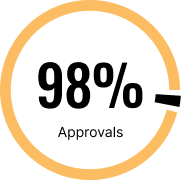
Our clients get their
visa on the first try
This is exactly where we start. Free assessment
in 15 minutes — and you will know exactly what to do next.
By submitting this form, you agree to the processing of personal data.
A trip to the United States for medical treatment requires the patient to explain much more to the consulate than a typical tourist itinerary. It's important to confirm the planned treatment, who is willing to accept the patient, how much it will cost, and where the funds for the clinic, accommodation, and other expenses will come from. The financial portion of such an application is scrutinized especially carefully.
There is no separate visa category for medical treatment in the American system. Typically, a B-2 or combined B1/B2 visa is issued for such a trip, and the term ""US medical visa"" is used more for convenience. The difference here isn't the visa name, but the case itself: you'll need documents from doctors and the clinic, proof of funding, and preparation for questions about treatment.
Visa Agency helps compile this information into a coherent application, significantly increasing the likelihood of approval.
A person has found a doctor in New York, arranged an operation, and received payment from the clinic. For them, the purpose of the trip is clear: treatment. In visa practice, such a case is usually called a medical visa, although the American system does not provide a separate permit with this name.
And not every foreign patient needs one. Some patients can come to the US under the Visa Waiver Program with ESTA. But if this is not possible, treatment becomes the basis for a regular visa application.
A B-2 visa is used for treatment. This visitor category allows temporary entry to the United States for medical treatment. A combined B1/B2 visa is also suitable: in addition to business travel, it includes the benefits of a B-2 visa.
If you already have a valid B1/B2 visa, applying for a new visa just for upcoming treatment is usually not necessary. The patient can use it for medical travel, and the purpose of the visit is stated upon entry into the United States.
A passport and DS-160 confirmation allow for the standard visa process, but provide little information about the treatment itself. In the medical case, the officer must tie together the diagnosis, the patient's plans, and the financial aspects of the trip into a coherent picture. Therefore, in addition to the basic materials, you may need:
The required documentation will vary from case to case. For example, when sponsoring, the documents of the person covering the expenses are important, and if the patient's treatment history is complex, additional medical documentation may be required.
It's best to begin the visa process once the trip is no longer just an idea. You have a clinic, a preliminary treatment plan, and at least some tentative dates. Using this information, you complete the DS-160, create a profile in the scheduling system, pay the consular fee, and select an interview time.
The rest of the process is tied to the scheduled date. Before the interview, you need to get your medical and financial details in order, and at the consulate, calmly explain the purpose of your trip and your plans after treatment. If the decision is positive, your passport will be submitted for visa processing. If the officer lacks information, the application may be delayed due to additional inquiries or verification.
During the interview, the medical case must be explained out loud, not simply presented with a folder of documents. The patient must clearly explain what is happening to them, why treatment is planned in the US, how long it will take, and who is paying for the trip. The consular officer has the right to specifically clarify the cost of treatment and the source of funding.
""Cramming"" answers here is rather harmful. It is much more useful to check the DS-160, doctor's letters, amounts, and dates in advance, so that one detail does not contradict another during the interview. It's important to prepare for the issue of returning after treatment: the B-2 visa remains a temporary stay visa, so a medical reason for travel does not waive the requirement to prove the nonimmigrant nature of the visit.
A weak point in many medical cases is an overly general agreement with the clinic. Phrases like ""ready to see the patient"" are insufficient if the documents don't clearly state what exactly is planned and how much it will cost.
Therefore, proof of treatment is collected from both sides. The local doctor describes the diagnosis and the reason for seeking treatment in the US. The American specialist or clinic confirms their readiness to see the patient, stating the expected duration and cost of treatment.
It's also important to demonstrate who is paying for the entire plan. If the funds are the patient's own, their financial means must be confirmed. If a relative or sponsor is covering the expenses, their documents and a clear explanation of the source of funds will be required.
Sometimes a trip simply cannot be completed without a second person. A child needs to be accompanied by a parent, an elderly patient needs assistance during the trip, and after surgery, someone may be needed to be with them during the first days of recovery.
The accompanying person must apply separately. Even if the trip is related to a relative's treatment, they will have their own application and visa decision. The application should clearly state why they are traveling with the patient, the length of their stay in the United States, and who is covering their travel and accommodations.
Even though the accompanying person is also applying for a B-2 or B1/B2 visa, the consulate evaluates their circumstances separately from the patient's medical case.
There is no standard, separate processing time for a medical B-2 visa. The patient schedules an interview at a specific embassy or consulate, and availability depends on their workload. After the interview, additional time may be needed for administrative review.
However, if urgent treatment is needed, simply waiting in line is not necessary. If the patient's condition requires immediate medical attention, after completing the DS-160, paying the fee, and scheduling the first available appointment, an emergency interview can be requested. The urgency must be supported by medical documentation, and the specific procedure for submitting such a request is determined by the chosen consulate. However, the final decision on granting an emergency appointment depends on the embassy, so it is crucial to provide accurate documents and a detailed description of the situation.
If the condition is life-threatening, the State Department specifically provides for expedited processing of such applications. This does not guarantee visa issuance, but it does allow for an attempt to reduce the wait in cases where a regular interview date makes timely treatment impossible.
For B-2 and B1/B2 visas, the consular fee is currently $185. This fee is paid for application processing and is non-refundable, even if the visa is denied.
After approval, citizens of some countries may be charged an additional visa fee based on the principle of reciprocity. Its size depends on the applicant's citizenship, so it must be verified separately.
A medical case often collapses not on a single document, but on inconsistencies. The clinic estimated the treatment at $60,000, but the patient's bill is $8,000. The sponsor only appeared before the interview. The letter from the American doctor indicates one treatment period, while the DS-160 indicates a different one. Or the documents don't even clarify why the treatment is planned in the US. For the consulate, such discrepancies mean that the requested trip is not yet convincing.
There is also a separate issue of return. The B-2 is intended for a temporary visit, so the patient must convince the officer that they will return home after treatment. If this is not possible, the application may be denied under INA 214(b).
The requirements for funding are even stricter. You need to prove funds not only for the clinic but also for travel, accommodation, and related expenses. For medical travel, the State Department explicitly cites insufficient funds for treatment as an example of a situation in which an INA 212(a)(4) can be denied due to the risk of becoming a ""public charge.""
However, a 221(g) indicates a different problem: the officer lacked documents or the application requires additional review. In this case, a new application is not necessarily required. The missing materials can be provided according to the consulate's instructions, after which the review will continue.
When traveling medically, the cost of error is higher than usual. If the review is delayed due to an incorrectly completed application, weak financial support, or poorly prepared clinic documents, the patient may simply not be able to receive treatment on time.
Therefore, Visa Agency does not undertake abstract ""support,"" but rather specific parts of the application:
The decision to issue a visa always rests with the consulate. Visa Agency's goal is to eliminate any inconsistencies in the case in advance, compile medical and financial documentation into a clear system, and guide the patient through the process without unnecessary errors. Submit your request, and during a free consultation, we'll figure out how to ensure you receive a US visa without bureaucratic hassle!


