


Core applicant package
Passport, photo, DS-160 confirmation, appointment confirmation, travel itinerary and documents explaining the purpose of the US visit.

and find out your real chances of getting a visa in just a few minutes.


Step 1 of 6
Step 6 of 6
Leave your contacts and get the result
By submitting this form you agree to the processing of your personal data.
Step 6 of 6
Analyzing your answers...
Checking the details you entered
Passport, photo, DS-160 confirmation, appointment confirmation, travel itinerary and documents explaining the purpose of the US visit.
Residence card, PESEL, employment contract, business registration, studies or another lawful status in Germany.
Strong ties to the country of residence, travel history, invitation, income proof and a clear return plan.
We define the purpose of travel, your legal status in Germany and the best application route for visa to the usa.
We prepare a checklist for your case: employment, business, studies, family visit or temporary stay in Germany.
We complete the form data, check transliteration, travel dates, contacts and itinerary logic.
We review bank statements, income evidence, residence card, PESEL, visa or another legal status before submission.
The case is filed through the CGI profile: we prepare DS-160, choose an available interview in Warsaw or Krakow and train the applicant for officer questions.
We track the case, respond to consular requests and help prepare additional explanations when needed.
We check the passport or electronic authorisation and explain entry rules and allowed stay.
| Applicants | Service fee |
|---|---|
| 1 person | from 180€ |
| 2 persons | from 320€ |
| 3 persons | from 450€ |
The final quote depends on the submission country, case complexity and consular fees.
Warszawa, Rondo Daszyńskiego 2B, 00-843 Warszawa, Poland.
Visits are by appointment: consultation, document review, form preparation and submission support.
The result you came for — an approved visa in your hands.

Full support: from filling out the application to receiving your passport.

I postponed it twice — thought I would be denied. The guys found weak spots and fixed them. Visa is in my passport!
bibosinkaWe will call you back in 15 minutes — assess your chances and tell you exactly what you need.
By submitting the form, you agree to the processing
of personal data.
From the first question «which visa fits?» to the moment
you hold the stamp in your passport
 STEP 1
We define the purpose of travel, your legal status in Germany and the best application route for visa to the usa.
 STEP 2
We prepare a checklist for your case: employment, business, studies, family visit or temporary stay in Germany.
 STEP 3
We complete the form data, check transliteration, travel dates, contacts and itinerary logic.
 STEP 4
We review bank statements, income evidence, residence card, PESEL, visa or another legal status before submission.
 MAIN
MAIN
The case is filed through the CGI profile: we prepare DS-160, choose an available interview in Warsaw or Krakow and train the applicant for officer questions.
 PERSONAL
We track the case, respond to consular requests and help prepare additional explanations when needed.
GUARANTEE
We check the passport or electronic authorisation and explain entry rules and allowed stay.
Physical office, official contract, and a personal
manager for every case
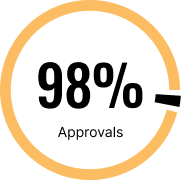
Our clients get their
visa on the first try
This is exactly where we start. Free assessment
in 15 minutes — and you will know exactly what to do next.
By submitting this form, you agree to the processing of personal data.
A German residence permit does not make travel to the United States visa-free. Yes, a German citizen (subject to the conditions of the Visa Waiver program) can travel for tourism or business for up to 90 days with an ESTA. However, Ukrainians, Georgians, and citizens of other CIS countries who hold a residence permit and are traveling on their ""native"" passports require a visa to the United States from Germany.
And it's best to start applying for one without first looking for an available interview slot. First, determine your category, understand the DS-160 form, and understand how to prove your purpose of travel, income, and ties to your country of residence. Visa Agency analyzes the client's case before submitting, prepares documents, and helps prepare for the interview so that applying for a visa isn't just a matter of filling out forms at random and hoping for a good interview.
American visas are pretty straightforward: what you plan to do in the country determines the category you'll be assigned. Wanting to spend two weeks in New York or Miami is one story. Getting accepted to university is another. Finding an employer in the US is a third.
B1/B2 visas are commonly used for tourism, visiting family, medical treatment, and some business purposes. Academic students apply for F-1 visas, while M-1 visas are available for vocational training. J-1 visas may be suitable for exchange and internship participants.
Employment is more complicated. Categories H, L, O, P, and others are available, with the choice depending on the profession, employer, and the reason for entry. A C visa is required for transit through the United States, as well as a C1D visa for sailors and pilots.
If your plans don't end with a return ticket to Germany, you're dealing with immigration procedures. Relocating to be with family, employment immigration, or investment are handled under entirely different rules.
Therefore, simply answering ""I'm going to the United States for three months"" is almost useless. What exactly you'll be doing during those three months is more important. This determines the application form, documents, and the entire application process.
With a US visa, the principle of ""the more paperwork, the better."" The consul may not even look at half the documents you bring. But if the conversation turns to work, money, family, or life in Germany, it's best to be able to document important circumstances by providing:
Particular attention should be paid to finances. There is no universal amount after which the financial issue can be considered closed. The trip must appear feasible for the applicant. Their income, savings, duration of the visit, and normal cash flow are taken into account. If someone earns 1,500 euros per month and suddenly receives 10,000 before the interview, such ""preparation"" is a significant factor. will likely create a new question.
If the purpose of the trip is to visit relatives, copies of their documents (passport, US residency status) may be required.
Also, for Ukrainians and some other foreigners applying for a visa in Germany, it is especially important to demonstrate legal residence in the country.
At the interview, you don't need to rant about your love for America or prove that New York has been your childhood dream. The consul asks questions about your situation, checks your answers against what is already stated in the DS-160, and pays attention to the applicant's confidence. The conversation can touch on any of these points, including the purpose of the trip, work in Germany, income, previous travel, relatives in the US, and who is paying for the visit. After the interview, the consular officer decides whether the applicant meets the requirements for the selected category.
Therefore, it's more useful to prepare not by memorizing the ""right answers,"" but by re-reading your application. Remember the specified dates, calmly explain your itinerary and budget, avoid confusion about your work history, and avoid trying to make your story sound more appealing than it already is. A discrepancy between your verbal answer and the DS-160 can raise questions where none existed.
On the day of the interview, most applicants also have their digital fingerprints taken. The DS-160 confirmation page with the application number is required: it allows the consulate to access your application. If for any reason the application numbers don't match, entry will be denied.
The main wait is scheduling your interview. In Germany, processing times vary by city: a spot can be found within a few weeks, but sometimes the wait is significantly longer. New slots appear regularly, so it's worth double-checking.
After the interview, decisions are often made quickly, but some applications are subject to administrative review without a fixed deadline. Therefore, it's best not to tie your trip too closely to the interview and avoid purchasing non-refundable tickets in advance.
For B1/B2 visas, the basic consular fee is $185 per applicant. This fee is paid for the application review, so there is no refund if the application is rejected. For work categories with a petition, the fee is higher – $205, with a separate surcharge for the petition depending on its subtype.
After approval, some citizens may be subject to an additional visa issuance fee, which depends on the passport, not on residency in Germany. For example, there is currently no such surcharge for Ukrainians on B1/B2 visas.
For B1/B2 visas, one of the main risks is failing to convince the consular officer that the trip is truly temporary. Questions can arise from a weak connection to Germany, an unclear purpose of the visit, a budget that doesn't correlate well with income, or interview answers that are inconsistent with the DS-160. Such refusals are usually issued under 214(b).
Incomplete documents or the need for additional verification under 221(g) are a separate issue. Attempting to conceal an important fact or provide false information can lead to much more serious consequences, including refusal on the grounds of fraud or misrepresentation.
In an American application, much depends not on the number of references, but on how well the entire story holds up to scrutiny. Visa Agency helps you gather all the necessary documents before the interview:
The decision is made by the consular officer, so no one can promise a visa. However, if you apply through Visa Agency, you go to the interview with a verified application and an understanding of your case, which increases your chances of success. Submit a request, and we will consult you on an American visa from Germany absolutely free!


